








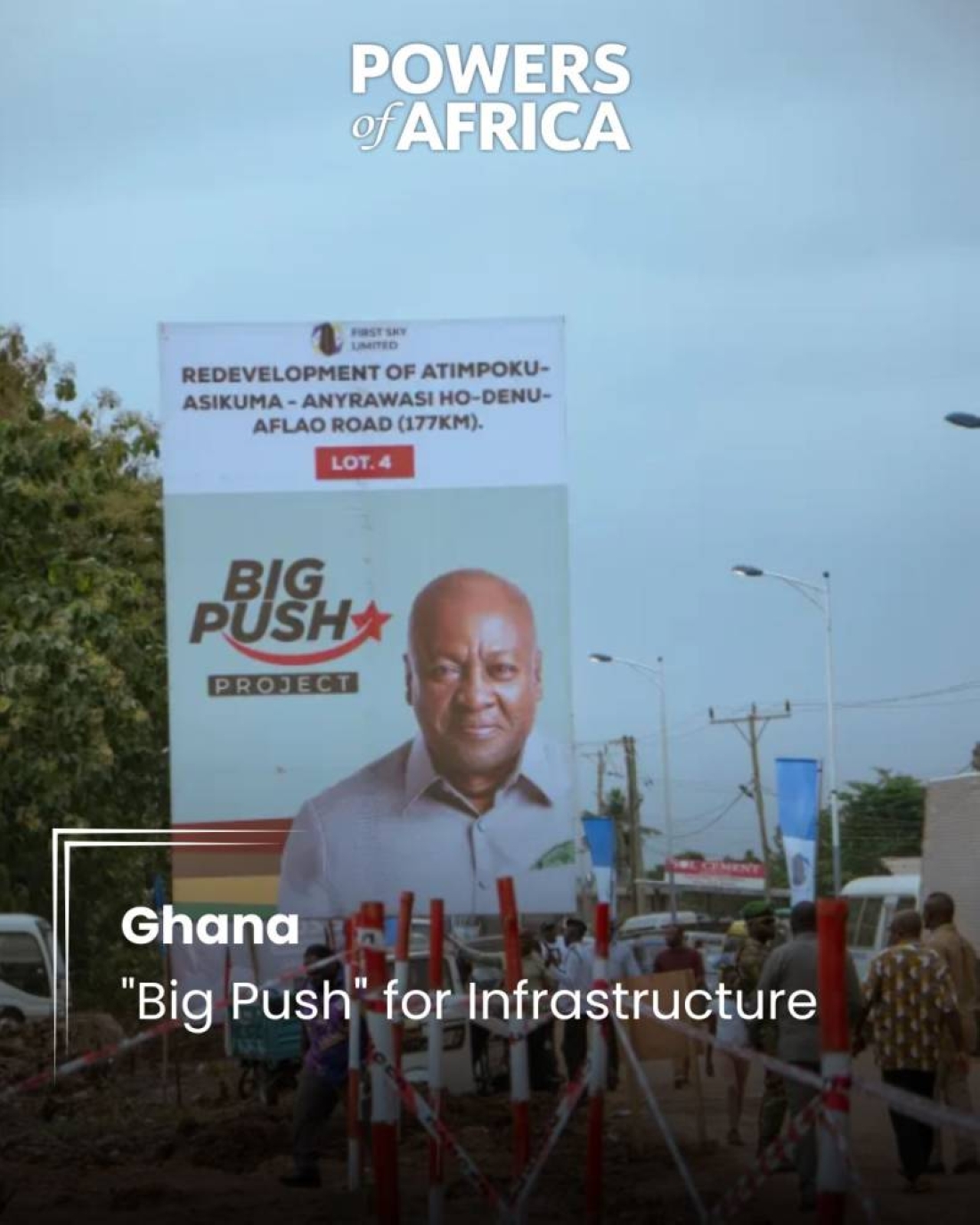


The Ghanaian government has announced its intention to invest $1.1 billion in large-scale infrastructure projects under the initiative called “Big Push” for national infrastructure development.
The funding will come mainly from oil revenues allocated under the Annual Budget Funding Amount (ABFA), as well as mining royalties. These resources are being redirected to key sectors such as roads and transportation, energy and power generation, digital infrastructure, and urban and rural development.
“This is not a small push or a patchwork fix. This is an economic reset, fueled by a massive $10 billion investment in the ‘Big Push’ for infrastructure development,” emphasized Deputy Finance Minister Thomas Ampem Nyarko.
Ghana’s infrastructure needs are considerable. According to government estimates, the country will require $37 billion per year over the next 30 years to meet its development goals across all sectors. Maintaining existing infrastructure alone will require an additional $8 billion annually.
The minister noted that the country scored 47 out of 100 on the Global Infrastructure Hub index, a level below the average for lower-middle-income countries. This illustrates chronic underinvestment.
He further stated that public funds alone will not be sufficient to meet these needs.
“Fiscal space is limited, and the demands are enormous. PPPs [public-private partnerships] are not just useful, they are indispensable,” he acknowledged, stressing that the Ghana Infrastructure Investment Fund (GIIF) will play a key role in creating dedicated Special Purpose Vehicles (SPVs) to mobilize private capital, blended financing, and international development funds.