29/09/2026 à 12:12
, Mis à jour le
29/09/2026
Senegal’s economy accelerated in 2025. According to the provisional national accounts published on September 18 by the National Agency for Statistics and Demography (ANSD), gross domestic product (GDP) grew by 6.5%, compared with 6.3% in 2024.
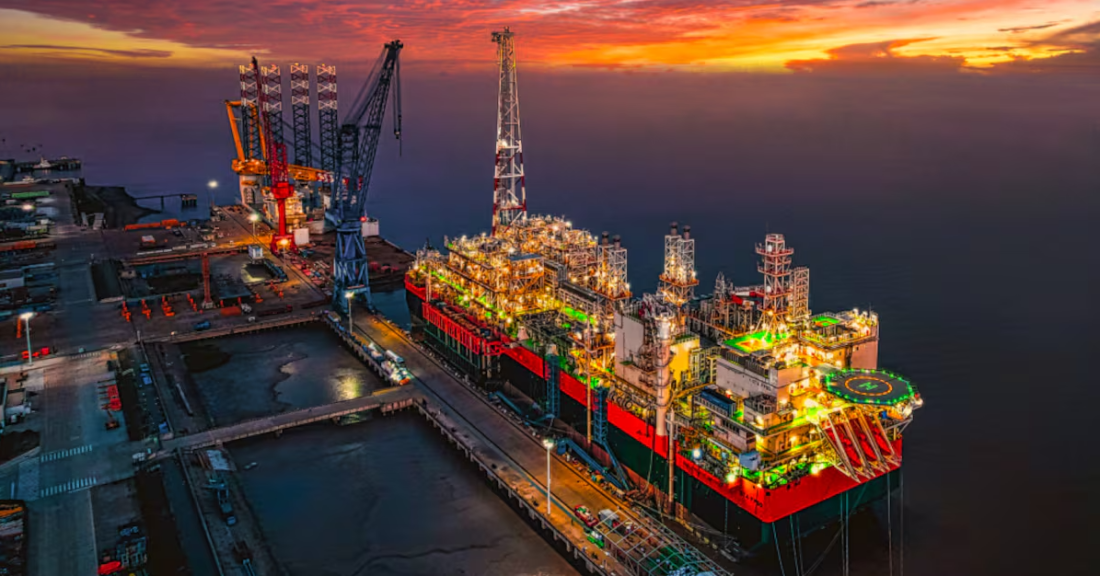
This performance was mainly driven by the secondary sector, boosted by the expansion of extractive activities, in a context marked by the first full year of oil production from the Sangomar field and the start of gas production from the Grand Tortue Ahmeyim (GTA) project.
But behind this strong overall growth, the figures reveal a more mixed picture. GDP excluding hydrocarbons grew by only 2.4%, compared with 3.3% in 2024. Excluding agriculture and hydrocarbons, growth slowed even further to 2.0%, compared with 4.0% a year earlier.
The Secondary Sector Leads the Way
The secondary sector emerged as the main driver of economic activity in 2025. Its value added increased by 15.9%, contributing 4.1 percentage points to GDP growth.
Extractive activities surged by 62.5%, while refining and coking recorded growth of 49.4%. This sharp increase notably reflects the impact of rising hydrocarbon production.
The primary sector also recorded growth of 5.5%. Agriculture increased by 7.4%, livestock by 5.3%, and fishing and aquaculture by 2.8%. Forestry, however, was an exception, declining by 2.6%.
Services Slow Sharply
The tertiary sector, however, lost momentum. Its growth fell from 6.1% in 2024 to 2.8% in 2025.
Specialized, scientific and technical activities notably declined by 17.5%. Accommodation and food services recorded growth limited to 0.5%, while information and communication grew by only 0.2%.
Exports Surge, Investment Slumps
On the demand side, exports of goods and services increased sharply, rising by 30.7%, mainly thanks to hydrocarbon exports. Exports of goods surged by 36.5%, compared with 6.8% for services.
Final consumption also increased by 4.2%, driven by a 4.0% rise in household consumption and a 4.9% increase in government consumption.
The main point of concern, however, was investment. Gross fixed capital formation (GFCF) fell by 13.0% in 2025. Public investment declined by 36.9%, while private investment decreased by 6.5%.
GDP of CFAF 25,767 Billion
At current prices, Senegal’s GDP reached CFAF 25,767.3 billion in 2025. Exports of goods and services stood at CFAF 7,081.3 billion, compared with CFAF 8,414.5 billion for imports.
ANSD’s figures thus portray a Senegalese economy undergoing major transformation: growth is accelerating thanks to oil, gas and extractive activities, while non-hydrocarbon sectors are growing more slowly and investment is declining sharply.