








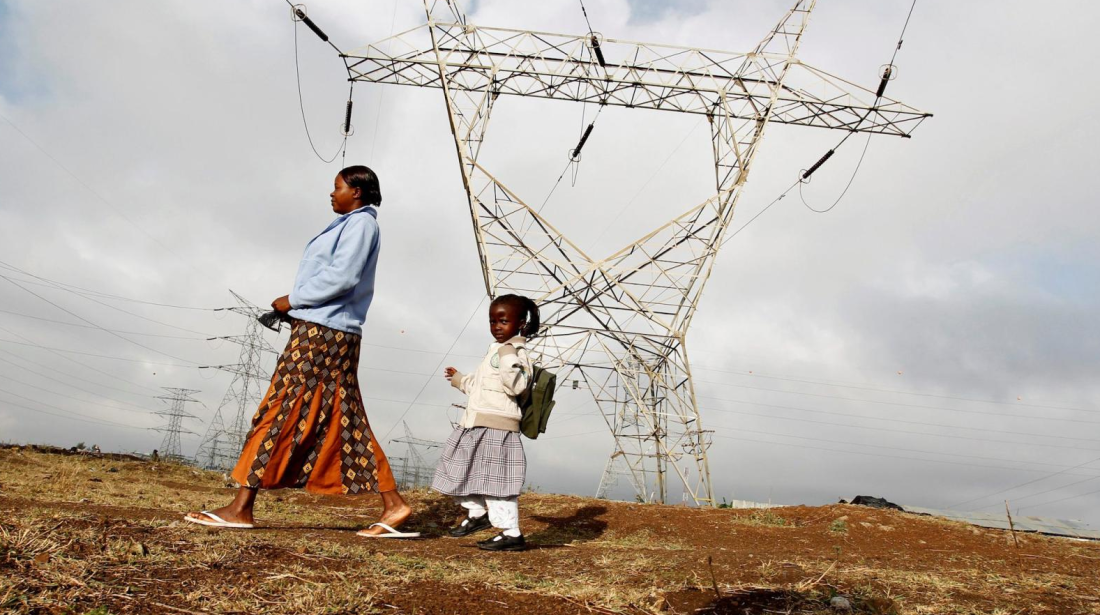


The Mission 300 initiative, led by the World Bank Group and the African Development Bank Group, has already provided electricity access to more than 50 million Africans across 40 countries. This major milestone brings the continent closer to its ambitious goal of connecting 300 million people to electricity by 2030.
Access to electricity is advancing at an unprecedented pace across Africa. The World Bank Group and the African Development Bank Group announced that more than 50 million people have already gained access to electricity through Mission 300, which was launched in 2024.
Now active in 40 countries, the initiative has nearly doubled the rate of new electricity connections compared to the period before its launch. This acceleration has been driven by massive investments across the entire energy value chain, from power generation and transmission to distribution in the most remote areas.
The results are particularly visible in Tanzania, where 7.5 million people have gained access to electricity, representing an electrification rate five times faster than before. In Ethiopia, 4.6 million new connections have been achieved thanks to reforms that have facilitated access to the national grid.
At the heart of this success is a coordinated approach. Mission 300 brings together governments, financial institutions, technical partners, and private investors around a shared roadmap designed to accelerate reforms and mobilize additional resources.
To date, nearly $15 billion has been committed by the World Bank and the African Development Bank, complemented by $4.5 billion in co-financing and more than $7 billion pledged by other international partners.
The initiative is also transforming Africa's energy investment landscape. Through innovative financing mechanisms and risk-mitigation instruments, the private sector is investing more heavily in areas that were once considered unprofitable. In Nigeria, more than 4.5 million people have been connected to electricity through projects led by private-sector operators.
At the same time, 30 African countries have already adopted National Energy Compacts aimed at strengthening their power systems, expanding renewable energy, and attracting further investment. Six additional countries are expected to join this effort during the African Energy Forum.
According to Ajay Banga, President of the World Bank Group, the challenge extends far beyond simply providing electricity: “Access to energy opens the door to jobs, education, healthcare, and new economic opportunities.”
A similar message was delivered by Sidi Ould Tah, President of the African Development Bank Group, who called for maintaining the momentum in order to reach the target of 300 million beneficiaries by 2030.
Supported by organizations including the Rockefeller Foundation, the Global Energy Alliance for People and Planet (GEAPP), and Sustainable Energy for All (SEforALL), Mission 300 has emerged as one of the largest electrification initiatives ever undertaken on the African continent.