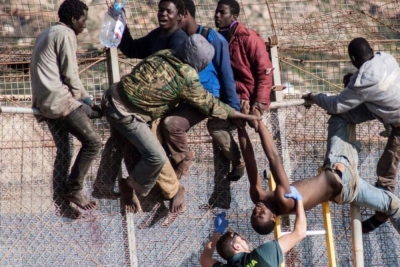









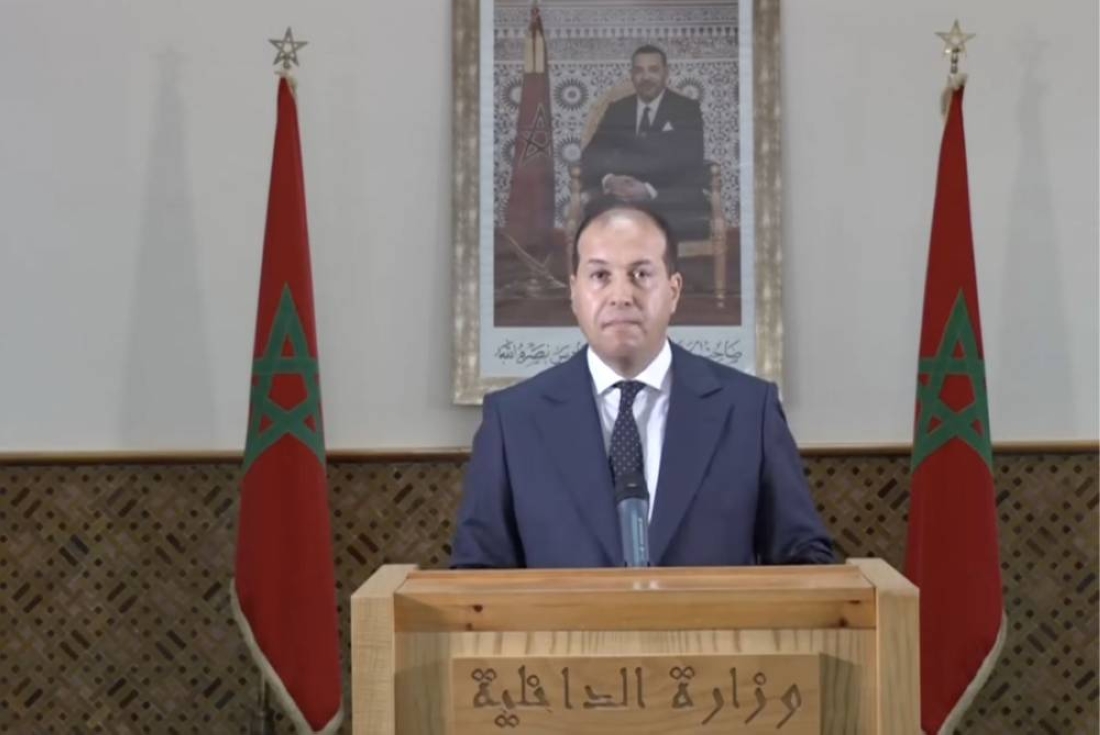


According to Morocco’s Ministry of the Interior, the recent events at the border crossing points leading to Sebta and Melilia were neither spontaneous nor the result of an isolated migration wave. Instead, the authorities point to a convergence of factors, including coordinated online disinformation campaigns, the activities of human trafficking networks, and widespread misinterpretations of recent Spanish judicial rulings. In a detailed statement, Rabat explains the origins of the crisis, outlines the measures taken to contain it, and reaffirms its commitment to international cooperation in managing irregular migration.
Morocco’s Ministry of the Interior maintains that the recent attempts to cross irregularly into Sebta and Melilia were driven by an organized dynamic rather than by spontaneous movements. The official assessment attributes the events to the combined impact of misleading information circulated through social media, the operations of human trafficking networks, and incorrect interpretations of Spanish legal and administrative decisions.
According to the Ministry, these false narratives convinced many prospective migrants that entry into European territory could be achieved without immediate legal consequences, triggering an unprecedented concentration of people at the border.
In response, Moroccan authorities activated a comprehensive preventive strategy at an early stage, mobilizing security forces, territorial authorities, and enhanced land and maritime surveillance. The Ministry says these measures enabled authorities to protect lives, maintain public order, and secure the Kingdom’s borders while acting in full accordance with the rule of law and the principle of proportionality.
Official monitoring systems estimate that approximately 40,000 people gathered in the direction of Sebta, while around 1,135 individuals attempted to reach Melilia. According to the Ministry, all those who succeeded in entering Melilia were immediately returned.
The Ministry stresses that these figures are based on official operational monitoring and statistical data and should therefore be regarded as the authoritative reference, dismissing other publicly circulated estimates as unsupported by reliable evidence.
The statement also highlights the impact of recent rulings by Spanish courts limiting the use of immediate return procedures for certain irregular migrants intercepted at sea. Moroccan authorities argue that these rulings were widely misunderstood and accompanied by misleading online narratives, creating the perception that swimming across the border would allow migrants to avoid immediate return. According to the Ministry, this misconception gave rise to a new pattern of irregular migration centered on sea crossings by swimming.
At the time of publication, the official toll stood at one accidental death, resulting from a fall from a rocky area near Sebta, and ten deaths by drowning.
The Ministry notes that the very short distance separating the two shores—less than 70 meters in some locations—and the relatively shallow waters created a false sense of security among many participants, leading them to underestimate the risks of the crossing, with tragic consequences.
Regarding reports of additional fatalities in Sebta, Moroccan authorities say they are continuing to verify the information through official cooperation channels with their Spanish counterparts in order to establish the exact number of victims, as well as their identities and nationalities, before completing the required legal, administrative, and humanitarian procedures.
Meanwhile, individuals wishing to return to Morocco were able to do so under the existing framework of cooperation with Spain. The reopening of border crossing points for voluntary returns contributed to a gradual restoration of normal conditions in the area.
The Ministry also confirmed that the competent Public Prosecutor’s Office has opened judicial investigations to establish the full circumstances surrounding the events, identify those responsible where applicable, and pursue any legal action required under Moroccan law.
Beyond the immediate management of the crisis, Morocco’s Ministry of the Interior reiterates that migration can only be addressed effectively through a comprehensive approach based on shared responsibility, genuine international solidarity, and equitable burden-sharing among partner countries. Rabat reaffirmed its determination to remain a reliable partner in combating irregular migration and human trafficking while continuing to safeguard public order, strengthen border security, and protect lives and property in full respect of the rule of law and Morocco’s international commitments.