








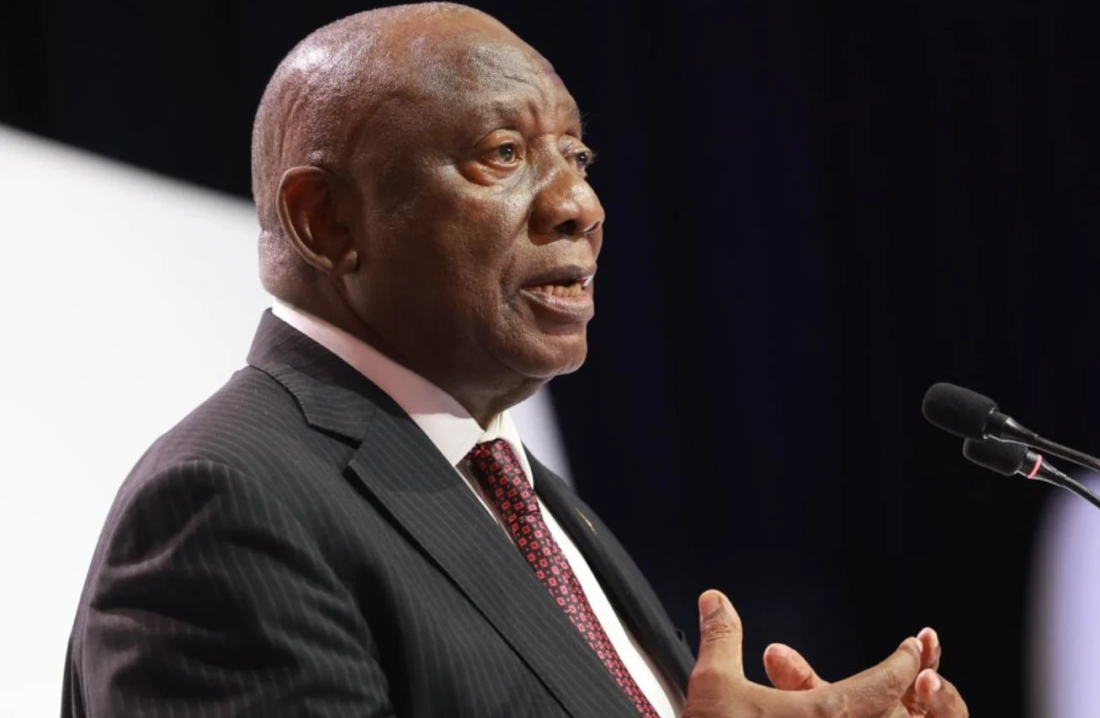


With the creation this weekend of a parliamentary inquiry committee into the so-called “Phala Phala” affair, South Africa has entered a period of intense political turbulence in which the fate of President Cyril Ramaphosa now hangs on a vote, while the Government of National Unity (GNU) is beginning to show signs of instability.
Following petitions filed by opposition parties, notably the Economic Freedom Fighters (EFF) and the National Transformation Movement, the Constitutional Court (CC) has revived the impeachment process against President Ramaphosa, triggering an institutional earthquake whose aftershocks threaten an already fragile GNU plagued by internal divisions.
As the country approaches the local elections scheduled for November 4, the entire national political landscape is being reshaped by the reopening of the investigation into the “Farmgate” scandal, linked to the mysterious 2020 theft of approximately 580,000 USD in foreign currency hidden inside sofas at the president’s game farm.
This week, National Assembly Speaker Thoko Didiza officially approved the creation of an inquiry committee tasked with determining whether there are sufficient grounds to impeach the president.
The committee is made up of 31 members proportionally representing the 16 political parties in Parliament, with clear dominance by the African National Congress (ANC) holding 9 seats, followed by the Democratic Alliance (DA) with 5, the uMkhonto weSizwe Party (MKP) with 3, and the EFF with 2, while the remaining seats are distributed among smaller parties.
In response to the proceedings, Parliament has split into two distinct blocs: supporters of the GNU coalition and the camp of the radical opposition.
Within the first bloc, ANC Secretary-General Fikile Mbalula stated:
“The National Executive Committee has reaffirmed, in clear and unequivocal terms, its full and continued support for the President of the ANC, Comrade Cyril Ramaphosa, as leader of this movement and, as such, head of the Government of National Unity.”
He rejected calls for the president’s resignation, emphasizing that the party would not vote to remove its own leader, especially since the Constitutional Court “has not found the president guilty of anything.”
A similar position was expressed by Deputy President Paul Mashatile, who recalled that Mr. Ramaphosa has committed himself to respecting parliamentary procedures and will not evade his responsibilities, insisting that:
“No one is above the law.”