








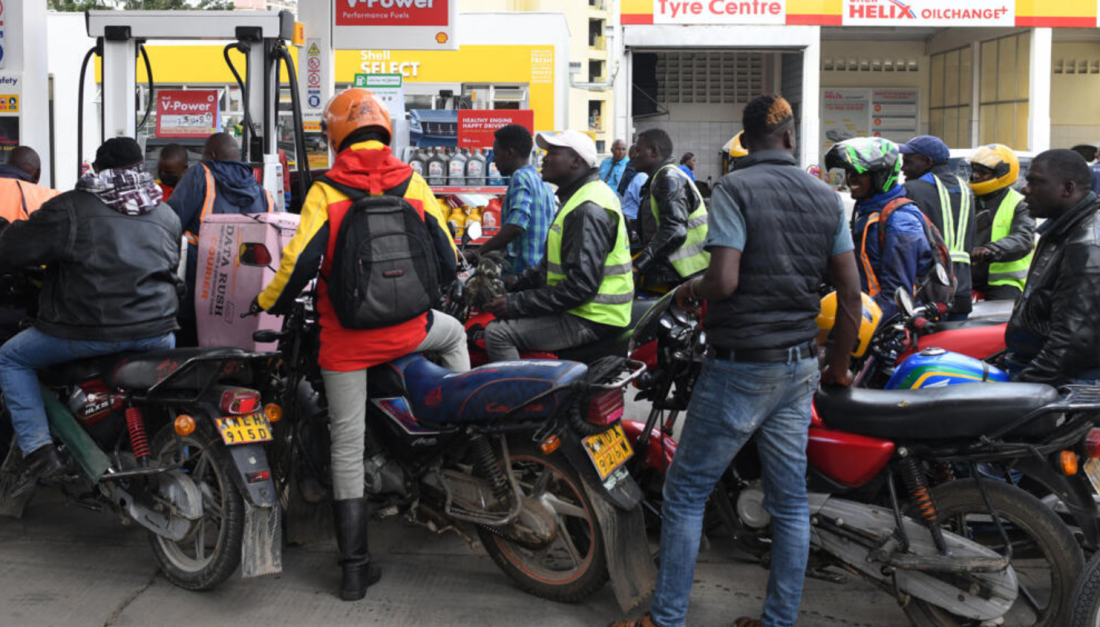


A public transport strike and road blockades by protesters opposing a new increase in fuel prices disrupted traffic on Monday in several Kenyan cities, including the capital Nairobi, according to AFP journalists and local media.
Kenya relies heavily on fuel imports from the Gulf and has been severely affected by the de facto blockade of the Strait of Hormuz, through which about one-fifth of the world’s oil supply typically passes.
The strike was initiated by the transport sector following a new government hike in pump prices announced on Thursday. Diesel prices, in particular, rose by 23.5%. The Transport Alliance, which brings together various industry stakeholders, had announced on Sunday that no vehicles would operate from midnight on Monday.
In Nairobi, protesters blocked a major highway with barricades and fires, with some attempting to stop vehicles. Demonstrators were heard chanting “wantam!” (“one term”), directed at Kenyan President William Ruto, AFP reporters noted.
Sporadic clashes broke out between protesters and police at several points along the highway. The country’s leading newspaper, Daily Nation, published footage online showing confrontations between demonstrators and police on a highway in northeastern Nairobi.
Thousands of Kenyan workers were also stranded due to the matatu strike—privately operated buses and minibuses that form the backbone of public transport in the country—according to local media.
In the capital, streets in several neighborhoods, usually congested in the morning, were largely empty, AFP journalists observed. Many schools announced they would remain closed for the day.
“This strike is completely unjustified, even though fuel prices have increased,” Finance Minister John Mbadi told private broadcaster NTV, noting that the government had spent hundreds of millions of euros to cushion the impact of rising global oil prices amid budgetary constraints.
“We did not start this crisis,” he added.
Kenyan authorities had already suspended the enforcement of fuel quality standards in April in order to maintain supply amid shortages.