








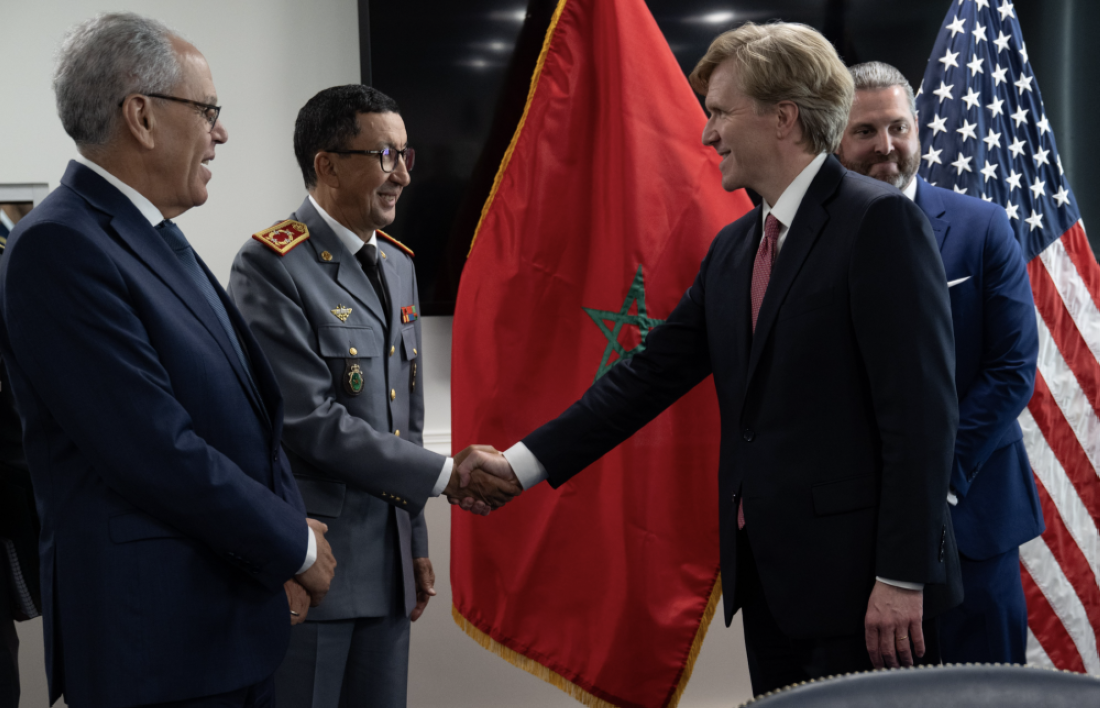


Pursuant to the High Royal Instructions, a high-level Moroccan delegation carried out a working visit to the United States from April 14 to 16, on the occasion of the 14th meeting of the Morocco–U.S. Defense Consultative Committee. The focus is now clearly set on further strengthening the strategic military partnership between Rabat and Washington.
Upon its arrival in Washington, the Moroccan delegation was received by U.S. Secretary of War Pete Hegseth, in the presence of Morocco’s Ambassador to the United States, Youssef Amrani, and the U.S. Ambassador to Rabat, Duke Buchan III. Discussions centered on reinforcing and upgrading the strategic partnership between the two countries, particularly in the areas of defense, defense industry, and cybersecurity, according to a statement from the General Staff of the Royal Armed Forces.
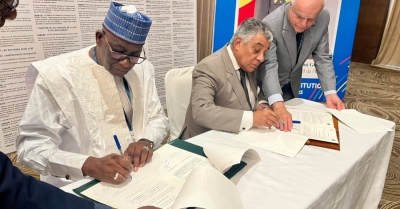
The highlight of the visit was the signing of a roadmap for defense cooperation covering the period 2026–2036. This structuring document reflects the shared determination to elevate this strategic partnership further, by expanding its scope and enhancing its effectiveness in serving the common interests of both nations.
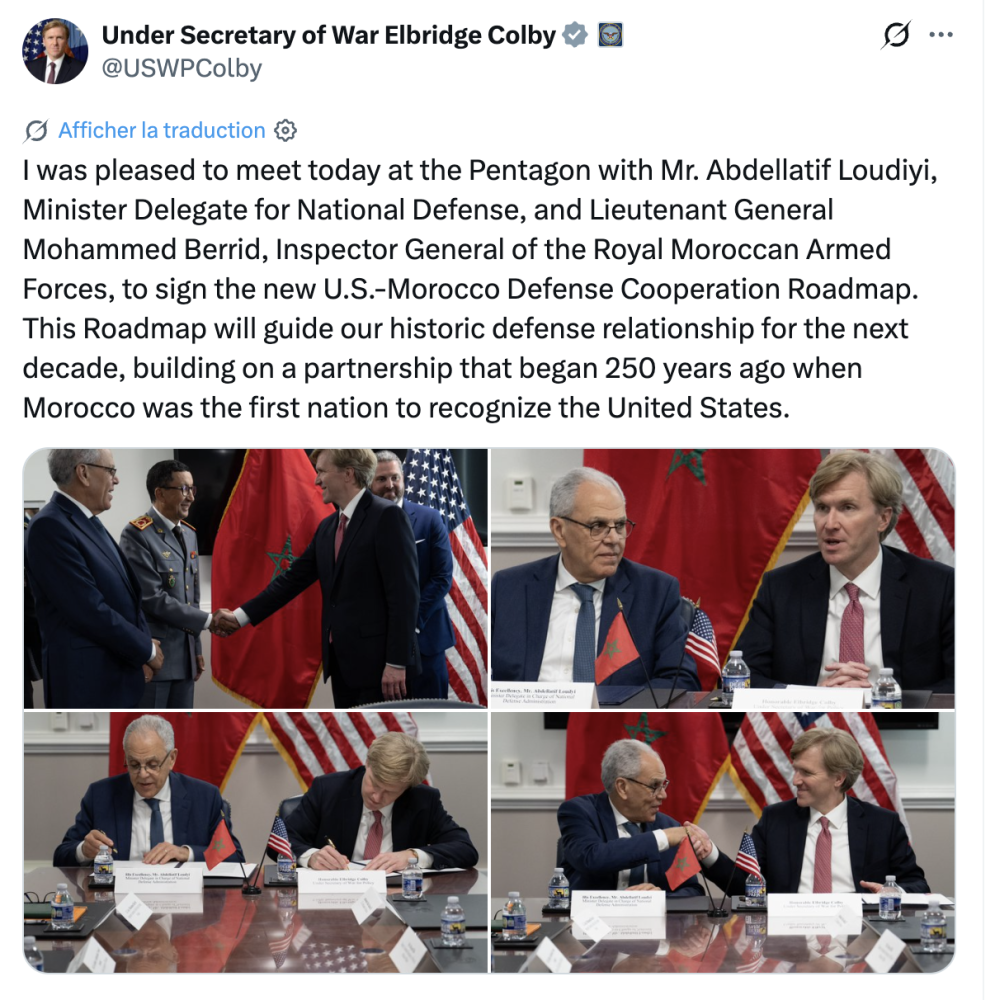
“This roadmap will guide our historic defense relationship for the next decade, building on a partnership that began 250 years ago, when Morocco was the first nation to recognize the United States,” said U.S. Under Secretary of War Elbridge Colby in a post on X following his meeting at the Pentagon with Abdellatif Loudiyi and General Mohamed Berrid.
Both sides unanimously praised the strength of a historic alliance rooted in exemplary relations, driven at the highest level by the sustained commitments of the two Heads of State. In this context, the Moroccan delegation reaffirmed the strategic convergence underpinning this partnership, while highlighting the consistent U.S. support for Morocco’s full and complete sovereignty over its Sahara.
The discussions also underscored Morocco’s role as a committed actor in promoting regional peace and security. Initiatives led by His Majesty King Mohammed VI—particularly those related to the Atlantic African initiative and the Morocco–Nigeria gas pipeline—were highlighted as flagship projects with strong strategic impact. Likewise, Morocco’s engagement in support of Gaza, within the framework of the Peace Council initiated by the U.S. President, as well as the active participation of Moroccan contingents in peacekeeping missions across Africa, were emphasized.
On the operational level, the meetings provided an opportunity to review what was described as a highly satisfactory record of bilateral military cooperation. Training programs, exchanges of expertise, modernization of capabilities, and large-scale joint exercises such as “African Lion” illustrate the depth of a partnership set to grow even stronger.
In this momentum, Rabat and Washington explored new avenues for cooperation, particularly in the fields of defense industry and cybersecurity—now key priorities in light of the rapidly evolving security threats and challenges facing both countries.