










In the face of climate shocks and mounting pressure on agricultural systems, the Kingdom is structuring a response built on research, innovation, and institutional cooperation. A landmark partnership is reinforcing this ambition.
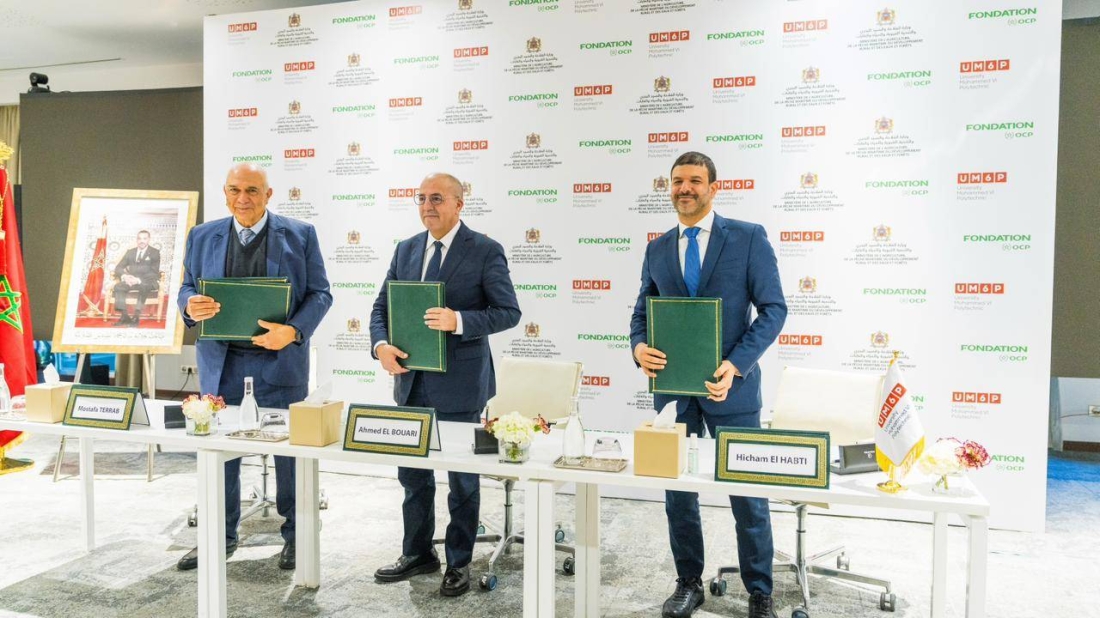
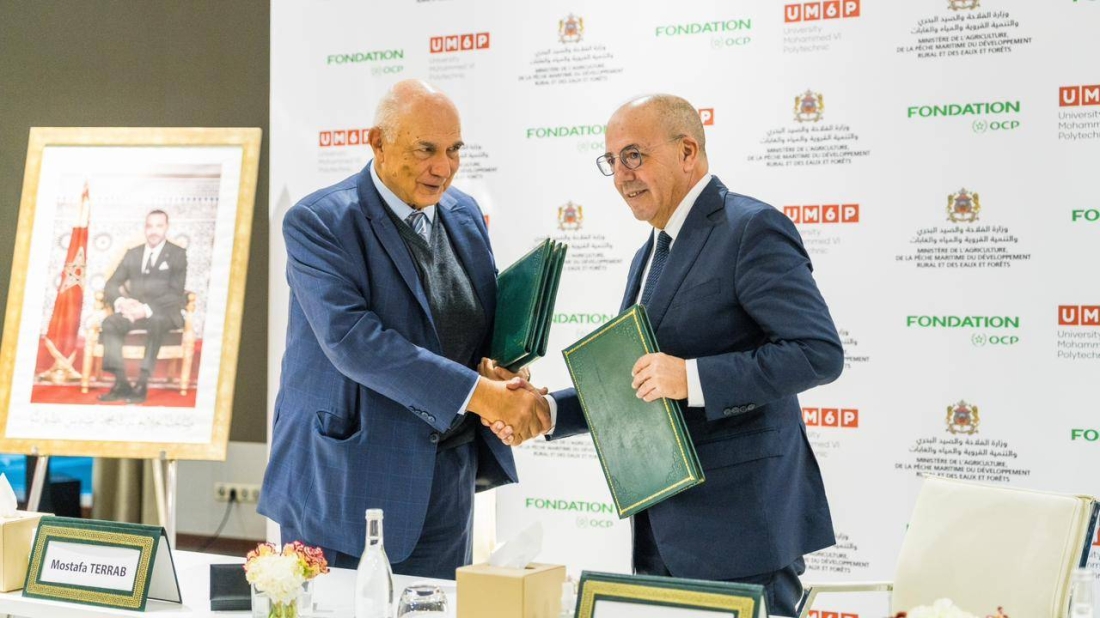
Amid a global agricultural environment under strain, Morocco is accelerating the consolidation of its rural development model. By formalizing a partnership between the Ministry of Agriculture, Maritime Fisheries, Rural Development and Water and Forests, the Ministry of Economy and Finance, the OCP Foundation, and Mohammed VI Polytechnic University, the Kingdom is taking a strategic step forward in the modernization of its agriculture. This initiative reflects a clear determination to align public policies, scientific expertise, and technological innovation around a long-term vision.
Aligned with the Royal High Guidelines and embedded within the “Green Generation 2020–2030” strategy, this cooperation aims to reposition Moroccan agriculture as a pillar of economic sovereignty and social stability. The challenge goes beyond productivity alone. It is about strengthening the sector’s capacity to absorb climate shocks, meet farmers’ expectations, and anticipate the profound transformations reshaping food systems.
Sustainable Food Security
The adopted approach is based on close coordination between applied research, field support, and skills development. Soil health stands as one of the cornerstones of the partnership, with the objective of tailoring fertilization practices to local agronomic realities and optimizing input use. This approach seeks to reconcile productivity, sustainability, and the preservation of natural resources.
Strengthening agricultural human capital is also central to the initiative. Targeted support programs will be rolled out to assist farmers, structure skills, and modernize practices. Agricultural training will be reinforced in collaboration with leading national institutions, including IAV Hassan II, ENA of Meknes, ENFI, and CAES-UM6P, to create a seamless continuum between education, research, and field implementation.
Another key pillar is resilience to climate change. The partnership will support operational programs such as direct seeding, agroforestry, the reintroduction of legumes, and the establishment of pilot farms. Sustainable water management—now a major strategic challenge across the African continent—occupies a central place in this framework.
Science and technology serve as the guiding thread of this cooperation. The integration of digital tools into agricultural policies, the development of new, territory-based advisory models, and support for AgriTech solutions designed in Morocco are all intended to bring innovation closer to farmers’ real needs. The objective is clear: to transform scientific knowledge into concrete, accessible solutions.
Framed by a framework agreement, this alliance will be implemented through specific agreements lasting three to five years, covering key areas such as applied agronomic research, training, integrated water management, and South–South cooperation. Each project will define its objectives, performance indicators, and the financial commitments of the partners involved.
Beyond its national impact, this initiative strengthens Morocco’s role as a leading agricultural hub in Africa. By capitalizing on its experience and scientific capabilities, the Kingdom affirms its commitment to sharing its solutions with other countries on the continent, embedding its agricultural action within a logic of solidarity and sustainable co-development.