








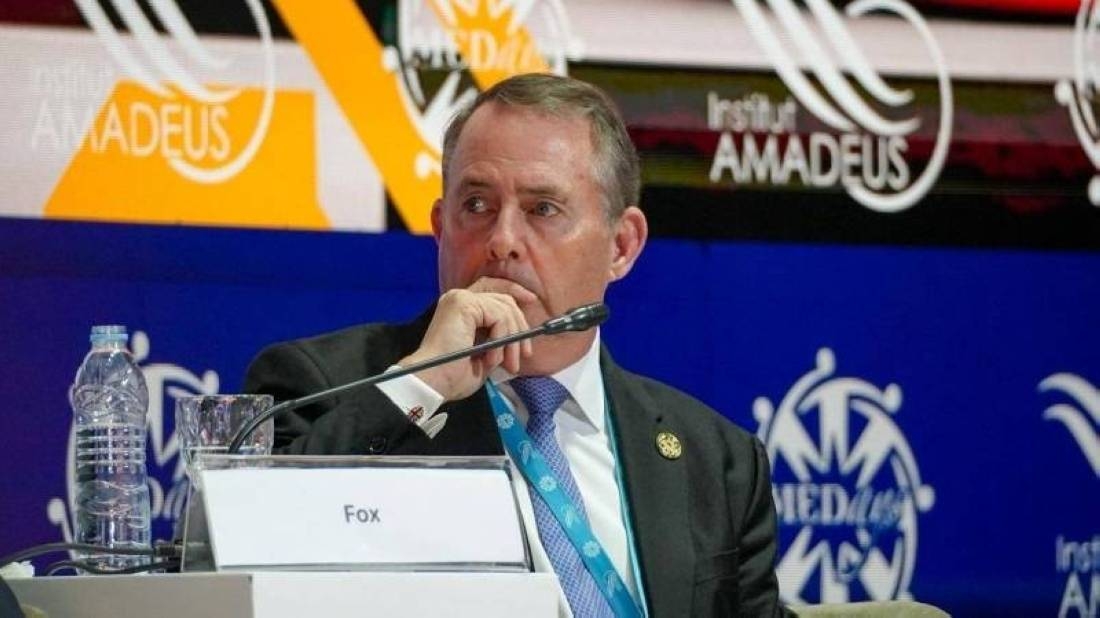


On the sidelines of the MEDays Forum, former UK Secretary of State for International Trade Liam Fox highlighted “the worrying rise of protectionism” among the world’s richest economies: “Developed countries are erecting barriers against poor countries. It makes no economic sense,” he warned, pointing to the growing number of protectionist measures adopted by major economies. He cited, in particular, U.S.–China tensions, recalling that China was admitted to the WTO as a developing country and continues to benefit from that classification despite being an economic powerhouse: “This creates a distortion that harms real developing countries.”
According to him, the new trade barriers erected by major economies block Africa’s access to markets it desperately needs in order to transform its own natural advantages.
Liam Fox emphasized Morocco’s strengths — its massive investments in renewables, its desalination capabilities, and its growing agro-industrial sector. A country, he said, that is giving itself the means to develop. “Morocco is doing everything in its power: it attracts investment and improves its services. What Morocco cannot control is access to international markets.”
For Fox, the paradox is striking: “Developed countries have benefited from free trade for decades. Now that emerging economies can finally take advantage of it, the doors are being shut on them.”
The former British official directly linked free trade to two global challenges: fighting poverty and reducing economic migration. “If we want more global prosperity and fewer forced migrations, we must keep markets open and fair.”
He argued that Africa holds immense potential, particularly thanks to its critical minerals, which are essential to the global energy transition: “The question is: how do we ensure that these natural advantages truly become a source of prosperity for local populations?”
Fox recalled that economic attractiveness does not rely solely on natural resources, but also on institutions — in particular legal security, regulatory predictability, the quality of the judicial system, workforce training, English proficiency in certain cases, and technological capacity. “One of the first factors for investors is not economic potential but the legal framework: how will disputes be resolved? Is it predictable? Is it fair?”
On this front, he said, Morocco is “at the forefront,” while other countries on the continent still need to catch up.
Liam Fox also pointed to the responsibility of wealthy countries: “We must understand what made us prosperous and accept that we have a moral duty to help other countries benefit from the same advantages.”
His message is clear: the development of African nations is not only in their interest — it is in the interest of the entire world.
To conclude, Liam Fox issued a call: “We must return to free, open, and fair markets. It is the only way to ensure global prosperity.”