








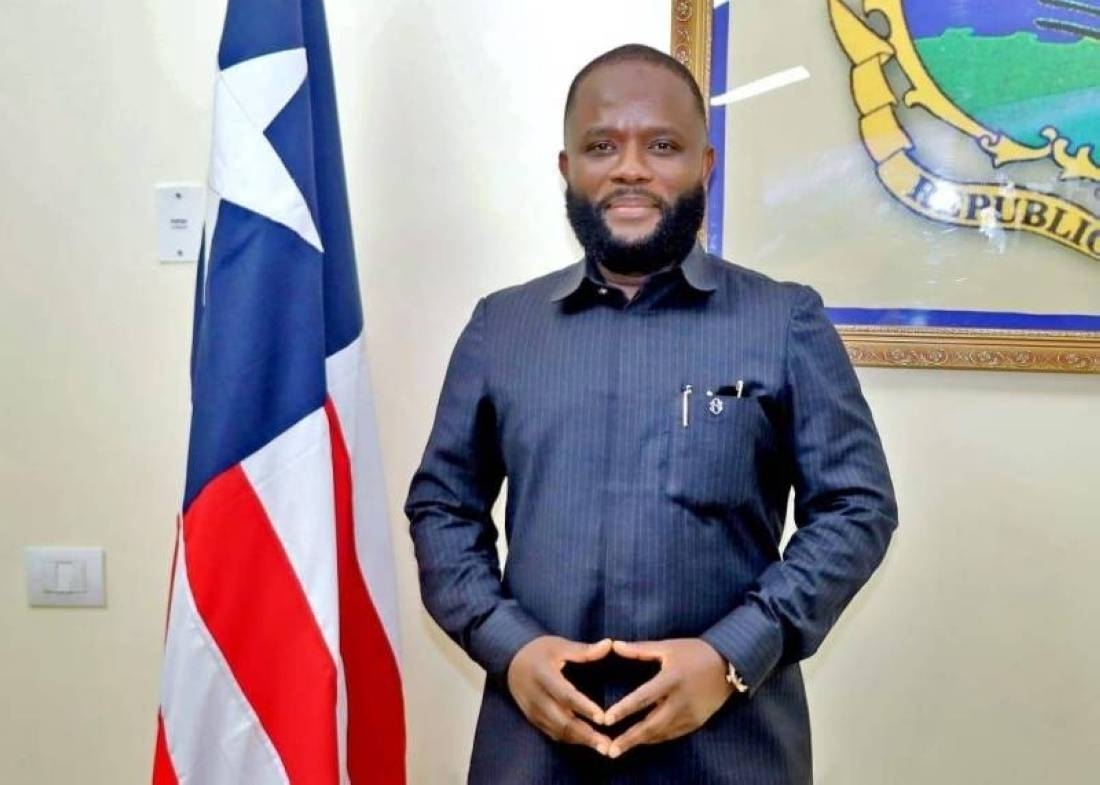


Liberia is banking on a strategic partnership with Morocco to strengthen its port positioning in West Africa. Inspired by Tanger Med, the country aspires to become a regional logistics hub, driven by an ambitious South–South cooperation. In an interview on the sidelines of the AfricaMed Business Forum, Sekou H. Dukuly, Director General of the National Port Authority (NPA) of Liberia, discussed the contours of this alliance.
L’Observateur du Maroc et d’Afrique: How is the port cooperation between Morocco and Liberia currently structured?
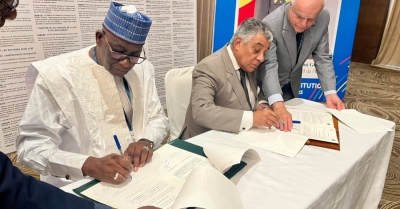
Sekou H. Dukuly: The cooperation between Morocco and Liberia in the port sector is exemplary, based on trust, a shared vision, and mutual respect. Under the enlightened leadership of His Majesty King Mohammed VI and Liberian President Joseph Boakai, we have initiated a strong and promising South–South dynamic. As soon as we took office at Liberia’s National Port Authority, we visited Morocco—specifically Tanger Med—to meet with officials. These exchanges quickly led to the signing of a contract to develop the master plan for the Monrovia Freeport and the Port of Buchanan.
What does this master plan entail?
The objective is to strategically reposition Liberia as a major maritime hub in West Africa. This plan aims to leverage our geographic location at the heart of the sub-region and to better utilize our natural resources. It’s part of a broader ambition to rewrite our economic trajectory and strengthen our logistical sovereignty.
What makes this cooperation with Morocco so special to you?
First and foremost: trust. The commitments made by our Moroccan partners have all been honored. On our side, we are committed to doing the same. This cooperation is just beginning, and we intend to expand it to other sectors. What Morocco has accomplished—with few natural resources but a great deal of vision—is simply remarkable. The country has built a resilient economy and an inspiring development model. We want to learn from it and adapt it to our own context.
Which sectors do you see as priorities to deepen this partnership?
We are particularly interested in industry, special economic zones, and renewable energies. Liberia is only four hours by air from Morocco. When you see the scale of Tanger Med—the leading transshipment port in Africa and among the top ten worldwide—you understand the value of such a model. Personally, I lived in Morocco more than twenty years ago. Returning today as a representative of my country is an honor. Morocco inspires us and challenges us to do better.
The Dakhla Atlantique port is under construction. Are there potential synergies?
Yes, discussions have already begun, particularly in the context of the Port of Buchanan’s development. Liberia is a neighbor to Mali, Niger, and other Sahel countries. It’s not about building competing ports, but rather thinking in terms of regional integration. Our position is ideal to facilitate intra-African trade—whether maritime, logistical, or commercial.
How do you view the Atlantic Initiative launched by His Majesty King Mohammed VI?
It’s an ambitious, clear-sighted, and profoundly African vision. His Majesty King Mohammed VI is a strategist. When he puts forward an idea, he sees it through. His journey over the past 25 years is proof of that. He has made Morocco a key regional player, emphasizing peace, respect, and cooperation. His diplomacy, grounded in peace, respect, and firmness, is a model. We fully support this Atlantic Initiative, as it also presents an opportunity for Liberia and for all of Africa.
Can the African Continental Free Trade Area (AfCFTA) accelerate port development in Africa? What must be done to make it fully effective?
Yes, provided we address the fundamentals. First, we must remove trade barriers between Mano River Union countries—Liberia, Sierra Leone, Guinea—and integrate Côte d’Ivoire into that dynamic. This requires the effective opening of borders, free movement of goods and people, and the implementation of a harmonized customs tariff. This would benefit the entire sub-region and beyond. To support this momentum, massive investment is needed in ports, infrastructure, technology, and especially in human capital. Development depends on it.
In your view, what are the main obstacles to achieving this vision of African port integration?
The first obstacle remains access to financing. Then come tariff and customs barriers. It makes no sense for a product to be taxed at 5% in one country and 20% in another. Harmonization is essential. We need to deploy regional strategies to pool our strengths, streamline trade, and build a connected, competitive, and sovereign Africa.