








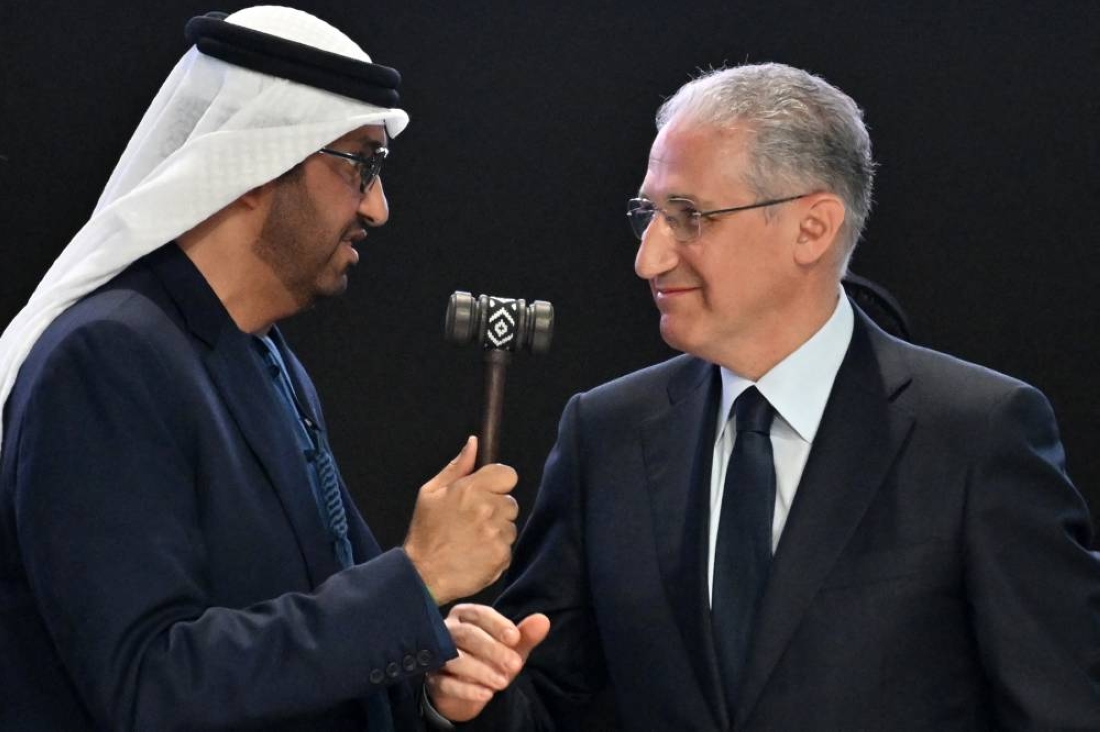


As COP29 unfolds in Baku, Mukhtar Babayev, the Azerbaijani Minister of Ecology and President of the conference, delivered a stern warning: “Colleagues, we are on the path to ruin.” His message was clear—climate change is no longer a distant threat but an immediate crisis impacting lives across the globe.
With recent events like flooding in Spain, wildfires in Australia, rising Pacific waters, and the parched plains of East Africa, Babayev questioned, "Do you see all of this or not?"
In his address, Babayev emphasized that people are suffering in silence. “Populations are suffering in the shadows,” he said. “They are dying in the dark and need more than compassion.” Expressing frustration, he urged for action beyond “prayers and paperwork,” insisting that those on the frontlines of climate change need strong leadership and effective measures.
The Azerbaijani minister highlighted the risks posed by inadequate funding for climate adaptation. Babayev argued, “If adaptation is underfunded, those on the frontlines will not be protected.” He reminded the global audience at COP29 that public financial resources are essential to achieving climate goals, making this an opportune moment to increase funding commitments significantly beyond the 2025 targets. According to him, funding must be seen as a cornerstone of security in a climate-challenged world.
Yet, Babayev stressed that the scope of climate action extends beyond financing. Effective measures must also include the development and transfer of necessary technologies. “We must never forget our shared humanity, our common world, and the mutual benefits of collaboration,” he stated passionately. He underscored that “every fraction of a degree matters. Every house lost is a failure. Every life saved is a victory. And the world is watching.”
Babayev’s call for leadership echoed through the conference hall as he challenged global leaders to act without delay. "They expect us to show leadership and cannot afford the cost of delay," he urged. His plea was a call for unity and solidarity, reinforcing Azerbaijan’s recent “solidarity for a green world” initiative launched in May, which emphasizes cooperative efforts toward sustainable development.
In passing the presidency of COP from Sultan Ahmed Al Jaber, the COP28 leader, highlighted the rapid advancements made since last year’s conference in Dubai. He noted that 55 companies have now signed onto the Oil and Gas Decarbonization Charter (OGDC), covering 44% of global oil production. This charter, according to Al Jaber, represents the most comprehensive private-sector partnership on decarbonization currently in existence. He emphasized that “when all sectors work together, we can stimulate economies, reduce emissions, make climate and socio-economic progress, and transform commitments into decisive action.”
Al Jaber also called on all parties to contribute to the Loss and Damage Fund, which was made operational during COP28. To date, over $850 million has been pledged to this fund and related financing mechanisms. He underlined that this support is critical for assisting vulnerable communities who bear the brunt of climate impacts.
Simon Stiell, Executive Secretary of the United Nations Framework Convention on Climate Change (UNFCCC), also took the stage, stressing the urgency of establishing a new global climate finance target. "If at least two-thirds of the world’s nations cannot quickly reduce their emissions, all countries will face the harsh consequences,” Stiell lamented. He argued that climate finance must not be viewed as charity, urging a reform of the financial system to ensure sustainable funding for global climate action.
As the conference continues until November 22, participants will assess progress in climate mitigation and discuss ways to strengthen global responses to this crisis. COP29 places a particular focus on climate finance, recognizing the need for all countries to reduce greenhouse gas emissions and protect lives and livelihoods from the worsening effects of climate change, particularly in vulnerable communities.