








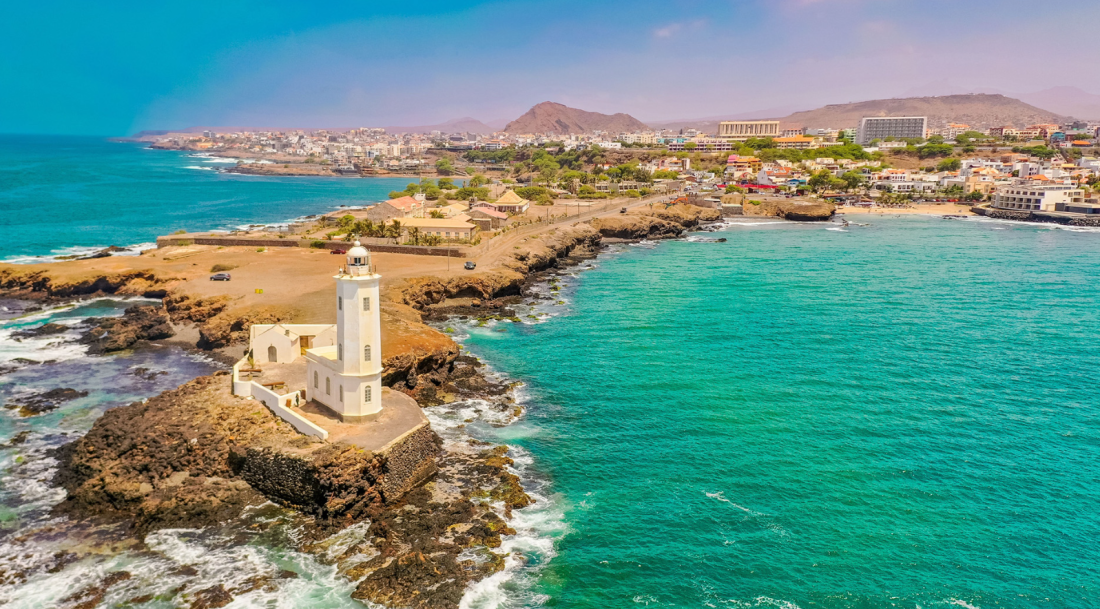


Driven by a buoyant tourism sector and supported by stronger macroeconomic fundamentals, the country recorded growth of 5.2% in 2025, following a 7.3% expansion in 2024.
Behind this performance lies a major challenge: mobilizing sufficient capital to finance the country’s economic transformation.
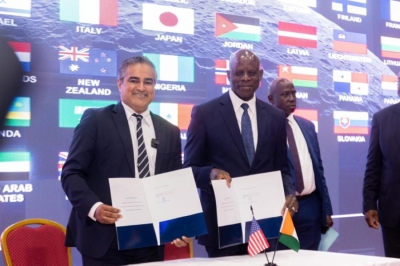
This is one of the key findings of the African Development Bank Group’s 2026 Country Report, launched in Praia.
Growth Still Driven by Tourism
Cabo Verde’s economy continued to expand in 2025 despite several constraints, including disruptions to electricity supply and a decline in official development assistance.
Tourism remains the main driver of growth. Demand for tourism services, combined with infrastructure investment, is expected to continue supporting economic activity in the coming years. Growth is projected at 4.7% in 2026 and 5% in 2027.
This outlook highlights Cabo Verde’s ability to sustain solid economic activity despite its continued exposure to external shocks.
Macroeconomic Indicators Remain Under Control
The country has also strengthened its economic fundamentals in recent years.
Inflation remained contained at 2.3% in 2025, while public debt continued to decline from the high levels recorded during the Covid-19 pandemic. The fiscal balance also improved, reaching a surplus of 1.1% of GDP.
According to the report, Cabo Verde also ranks among Africa’s top performers in governance and public-sector reform.
Annual Financing Needs Could Reach $1.4 Billion
Strong economic fundamentals, however, do not eliminate the country’s substantial financing needs.
According to African Development Bank estimates, Cabo Verde will need to mobilize around $163 million annually through 2030 to accelerate its structural transformation.
When broader development priorities are included — such as infrastructure, housing, social protection, healthcare, water and sanitation, and digital transformation — annual financing needs rise to approximately $1.4 billion.
Bridging the gap between available resources and investment needs will therefore be one of the country’s main challenges in the years ahead.
The Diaspora as a Strategic Source of Capital
Cabo Verde nevertheless has several potential sources of financing to support its development.
Diaspora remittances are estimated at €310 million in 2025, while foreign direct investment reached approximately $148 million.
These resources are complemented by pension savings, insurance company assets and growing domestic deposits.
According to the African Development Bank, these financial flows represent a significant pool of long-term capital. The challenge now is to channel more of these resources into productive investments capable of supporting growth, employment and economic resilience.
Tourism, Fisheries, Digital Economy and the Blue Economy
Several sectors could play a key role in the country’s economic transformation.
Beyond tourism, the report identifies fisheries, renewable energy, digital services and the blue economy as areas with significant potential to attract investment and diversify sources of growth.
Developing these sectors could also help reduce the vulnerability of an island economy that remains heavily dependent on tourism and exposed to external shocks.
A New Phase for Cabo Verde’s Economy
With growth projected at 4.7% in 2026 and 5% in 2027, inflation under control and public debt declining, Cabo Verde enters the next phase of its development with stronger economic fundamentals.
The challenge now is to move from stability to faster economic transformation.
To achieve this, the country will need to mobilize significantly more investment, channel available savings more effectively and attract greater capital flows into productive sectors.
Tourism will remain a key growth driver, but diversification into renewable energy, digital services, fisheries and the blue economy could prove crucial to strengthening resilience and building more inclusive and sustainable growth.