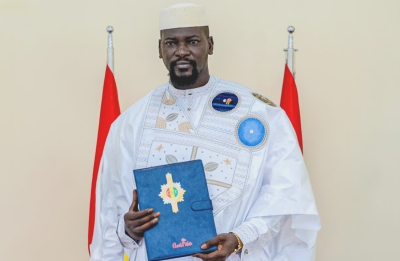












Mali could record real economic growth of 6.3% in 2026, according to projections put forward by President Assimi Goïta. The figure is higher than the latest forecasts from the International Monetary Fund (IMF) and the African Development Bank (AfDB).
In his address to the nation marking the 66th anniversary of Mali’s independence, published on Monday, September 21, Goïta said the Malian economy is expected to gain momentum after national authorities estimated growth at 5.6% in 2025. He attributed the expected acceleration in part to the mobilization of domestic resources and reforms in the mining sector.
The IMF, however, offers a more moderate outlook. In its latest assessment of Mali, the institution forecasts growth of around 5.5% in 2026, following 4.9% in 2025. The recovery is expected to be supported by a gradual improvement in the security situation, a rebound in gold production, a better business environment and a recovery in credit.
The AfDB’s projection falls between the two, with growth expected to reach 6% in 2026, up from 5.6% in 2025. According to the pan-African institution, the expansion should be driven mainly by agriculture and mining, alongside increased public investment in infrastructure, particularly roads, energy, water and sanitation.
Mining Revenues at the Heart of the Strategy
In his address, Goïta also highlighted the initial benefits of reforms in the mining sector. He reported that CFA 18.435 billion had been allocated to the Local Development Mining Fund, while CFA 109.142 billion had been earmarked for a fund dedicated to energy, water and transport infrastructure.
The strategy nevertheless faces several risks. The IMF has highlighted insecurity, fuel supply difficulties and financing costs among the main challenges. The AfDB, meanwhile, has pointed to risks stemming from disruptions to electricity supply, commodity price volatility and agriculture’s vulnerability to climate shocks.
With the government projecting 6.3% growth, the AfDB forecasting 6% and the IMF 5.5%, estimates differ over the scale of Mali’s expected economic acceleration in 2026. The outcome will depend largely on developments in the security situation, mining production, public investment and the economy’s ability to overcome energy and financing constraints.