








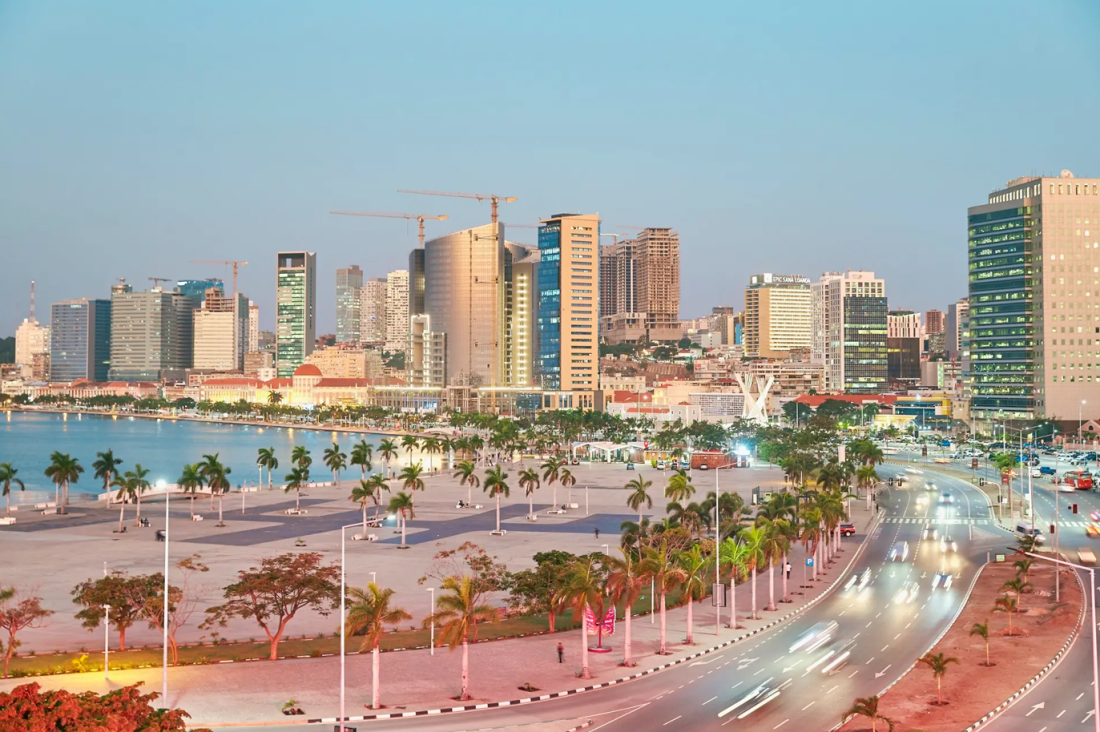


Angola needs to achieve annual economic growth of at least 7% to keep pace with its population growth of around 3.5% and finance its substantial infrastructure needs, according to the African Development Bank (AfDB).
In a report presented Tuesday in Luanda, the institution estimated that Angola requires nearly $14 billion a year to achieve the Sustainable Development Goals (SDGs) and meet its commitments under Agenda 2063. Currently, less than 40% of that amount is being mobilized, leaving an estimated annual financing gap of $8.6 billion.
According to the AfDB, the shortfall is due not only to limited available resources but also to difficulties in mobilizing and efficiently channeling capital on a large scale.
Investment, estimated at 10.6% in 2025, remains below the country’s needs. The Bank highlighted several constraints, including weak financial intermediation, inadequate project preparation, shortcomings in competitive procurement procedures, the size of the informal economy and limited access to long-term financing.
The AfDB also noted that domestic savings, estimated at 15.7% in 2025, remain largely underutilized. At the same time, access to external concessional financing is becoming increasingly limited and costly.
Despite these challenges, the pan-African institution highlighted the “strong resilience” of Angola’s economy. Between 2020 and 2025, fiscal deficits remained below 3% of GDP, while average inflation fell from 25.8% to 8.79%. Over the same period, the public debt-to-GDP ratio declined from 119% to below 50%.
Economic growth reached 3.1% in 2025, driven mainly by the non-oil sector. For 2026, the National Bank of Angola forecasts real GDP growth of 6.15%, supported in particular by a recovery in oil prices.
The AfDB nevertheless considers this pace insufficient to significantly reduce poverty and meet the country’s development needs. Accelerating growth and mobilizing additional financing therefore remain key challenges for Angola’s economy.