








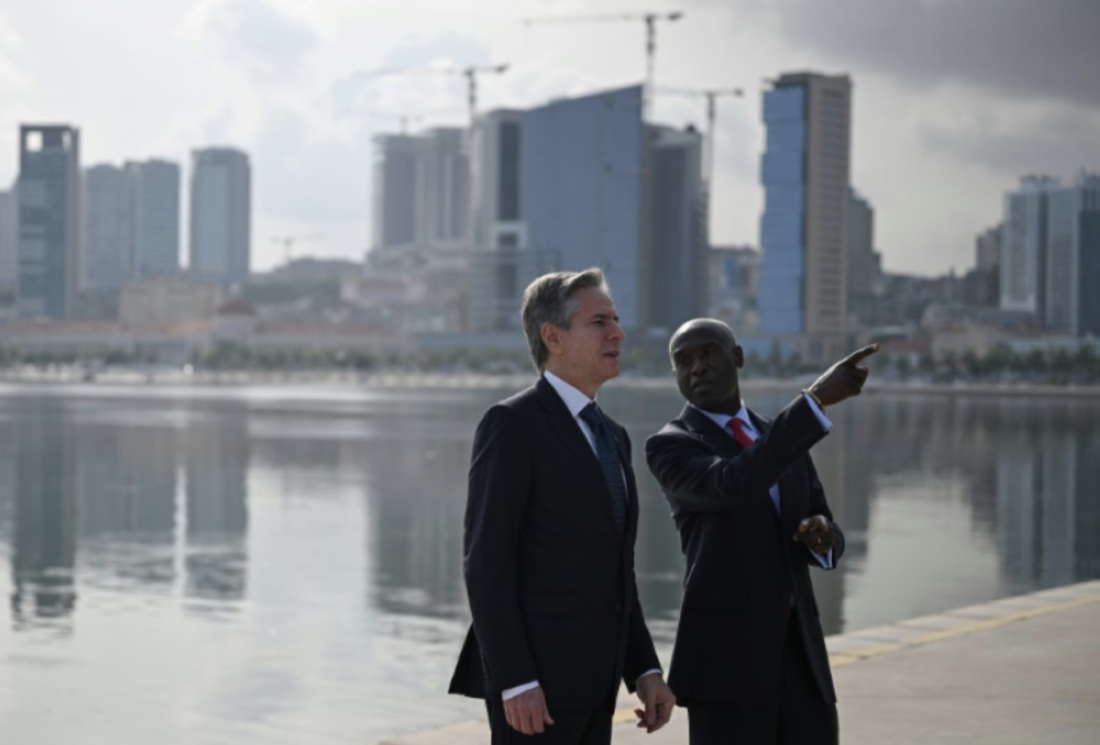


The U.S. Secretary of State, Antony Blinken, concludes his African tour in Luanda on Thursday, January 25, aiming to strengthen American presence in Africa to counter Chinese influence and Russian competition.
After visiting Nigeria, the demographic giant and Africa's largest economy, Antony Blinken arrived in Luanda, the capital of this former Portuguese colony and a significant oil producer, on the evening of January 24.
It is scheduled for the U.S. Secretary of State to meet with President Joao Lourenço on Thursday, who had previously met with Joe Biden at the White House two months ago.
In recent years, the United States and Angola have drawn closer. President Biden had praised a partnership "more significant than ever" in November, following his meeting with his Angolan counterpart.
The U.S. has notably invested in the "Lobito Corridor," a major infrastructure project connecting the Democratic Republic of the Congo and Zambia via the port of Lobito in Angola.
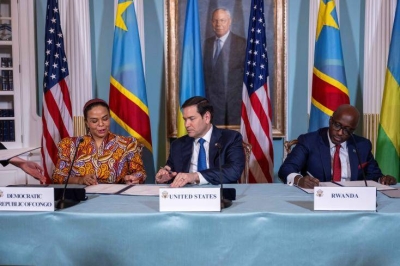
The recent withdrawal of Angola from the Organization of the Petroleum Exporting Countries (OPEC), amid disagreements over oil production quotas, is expected to be discussed. Additionally, discussions may cover Angola's efforts to end the conflict in the eastern Democratic Republic of the Congo.
Before Angola, Antony Blinken had visited Cape Verde, Côte d'Ivoire, and Nigeria.
In Lagos, the economic capital of Nigeria, Antony Blinken met with doctors from the Nigerian Institute of Medical Research, which is at the forefront of the fight against AIDS in the country. The institute has received support from the U.S. through the President's Emergency Plan for AIDS Relief (PEPFAR).
This investment in AIDS treatment, launched in 2003 for 20 years, has saved 25 million lives, primarily in Africa, according to U.S. officials. For Blinken, the work of the Nigerian institute, which also aids other African countries, highlights the importance of extending PEPFAR "quickly."
"It is literally about saving more lives, changing more lives, and addressing HIV/AIDS once and for all," said the senior U.S. official to the press. PEPFAR had enjoyed nearly unanimous support in the U.S. Congress until recently, but its five-year extension has not been approved due to deep divisions.
Blinken's visit follows that of Chinese Foreign Minister Wang Yi, who visited Côte d'Ivoire as the last stop in his African tour, which included Egypt, Tunisia, and Togo.
Washington regards Beijing as its primary strategic rival and presents itself as a better partner for Africa than China, which funds major infrastructure projects through loans. However, the last visit by a U.S. president to Africa dates back to 2015 when Barack Obama visited Kenya and Ethiopia.