








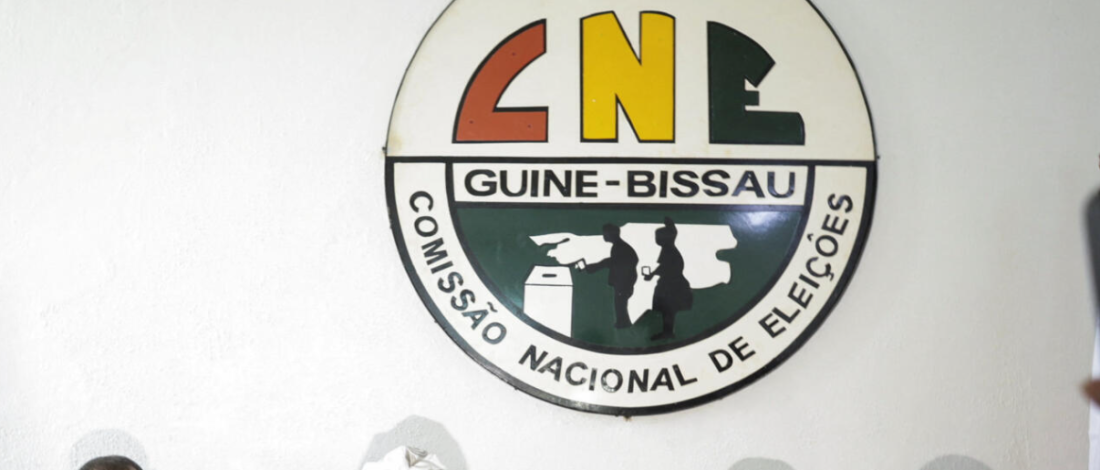


Guinea-Bissau has taken a new step in its political transition. The new Constitution was approved by 70% of valid votes in the referendum held in the country, according to results announced by the National Electoral Commission (CNE).
The “yes” vote received 383,117 votes, compared with 160,904 votes for “no,” representing 70% and 30% of the votes cast respectively. Turnout stood at 62.6%, with 572,714 voters out of 914,428 registered voters.
Beyond the referendum result, it is above all the new structure of power that is drawing attention. The constitutional text considerably strengthens the powers of the head of state. The president will notably be able to appoint and dismiss the Prime Minister and members of the government, as well as create or abolish ministries.
In certain crisis situations, the president will also be able to dissolve the National Assembly. This represents a major change in a country where the institutional system had until now been based on a more balanced sharing of executive power between the presidency and the Prime Minister’s Office.
A Smaller Parliament and Stricter Requirements for Presidential Candidates
The reform also profoundly changes the functioning of the legislative branch. The number of members of the National Assembly will fall from 102 to 65, while the number of electoral constituencies will be reduced from 29 to 12.
Another significant change is that candidates for the presidential election will now be required to prove five consecutive years of residence in Guinea-Bissau.
For the transitional authorities, the reform aims to put an end to recurring deadlocks in the semi-presidential system and reduce confrontations between the head of state and the Prime Minister. The stated objective is to strengthen institutional stability and prepare for a return to civilian rule.
A Reform Adopted, but a Highly Contested Referendum
The adoption of the Constitution comes, however, in a particularly tense political context. The referendum was held less than a year after the military takeover, which followed an electoral crisis in November 2025.
The transitional authorities have set December 6, 2026, as the date for general elections, presented as the step that should pave the way for a return to civilian rule.
But the opposition rejects the process. The PAIGC, the main opposition force, had called for a boycott of the referendum, arguing that the conditions necessary for a credible vote were not in place. Civil society organizations have also warned of the risks associated with an excessive concentration of power in the hands of the president.
The PAI–Terra Ranka and API–Cabas Garandi coalitions, as well as the Firkidja di Pubis movement, went further, describing the referendum as a “total failure.” According to them, abstention exceeded 90%, an estimate that contrasts sharply with the official turnout of 62.6%.
Speaking to DW Africa, analyst João Conduto considers the boycott a political signal in favor of a return to constitutional order. He does not rule out the possibility that the authorities may seek to reinterpret the referendum result or revise the electoral timetable, but believes that inclusive political dialogue remains essential to bring the country out of the crisis on a lasting basis.
Thus, behind the victory of the “yes” vote, the referendum opens a new political battle: the legitimacy of the new Constitution and the balance of power in the future Guinea-Bissau.