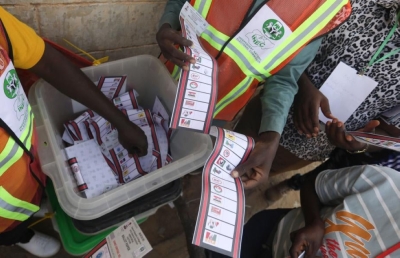








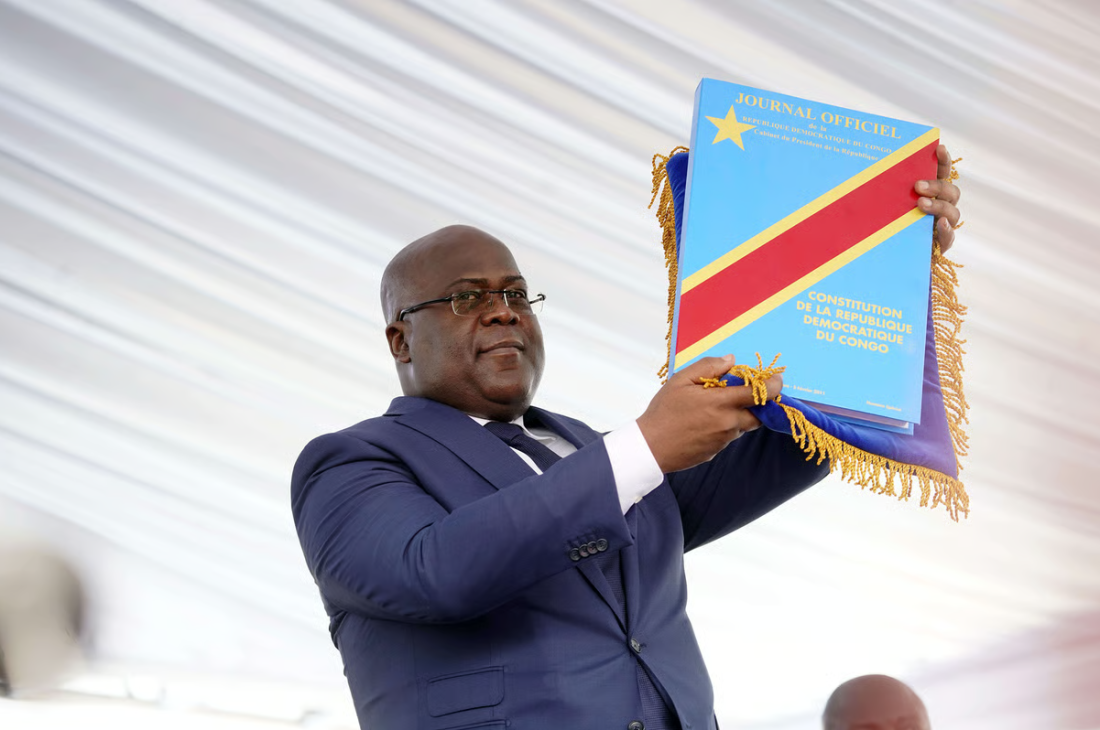


The President of the Democratic Republic of the Congo (DRC), Félix Tshisekedi, has promulgated a law making it easier to hold referendums to amend the Constitution or adopt a new fundamental law. The decision has reignited political tensions in the country, as the opposition accuses the head of state of laying the groundwork for a third presidential term.
The promulgation of the law was announced overnight from Tuesday to Wednesday on national television (RTNC). The new legislation expands the possibilities for organizing a constitutional referendum, potentially paving the way for a revision of the rules governing the exercise of presidential power.
In power since 2019, Félix Tshisekedi is normally expected to complete his second and final term in 2028. The current Constitution limits presidents to two five-year terms. However, an amendment to the Constitution or the adoption of a new one could call this restriction into question.
The Congolese president himself fueled speculation last May when, during a rare press conference, he stated that he would accept a third term if the people wanted him to.
For the opposition, the new law represents another step in a strategy aimed at extending his hold on power. Jean-Baptiste Kasekwa, a member of the C64 coalition, denounces what he sees as a maneuver designed to remove constitutional obstacles to a third term.
Opposition to the move had already led to several demonstrations in June and September in Kinshasa and other major cities across the country. Protesters denounced what they described as a “constitutional coup.” However, weakened and divided since the 2023 presidential election, which Félix Tshisekedi won by a wide margin, the opposition has struggled to mobilize large numbers of supporters.
The demonstrations were also marked by clashes and interventions by security forces. The United Nations notably reported at least one death during the June protests in Kinshasa. In September, the opposition reported the death of one of its members.
The political crisis is also unfolding against a particularly tense security backdrop. In the east of the country, devastated by more than three decades of conflict, the M23 rebellion, which Rwanda is accused of supporting according to several international allegations, continues to threaten national stability.
Former President Joseph Kabila, who ruled from 2001 to 2019, has also entered the debate. In October, he denounced the government's intention to amend the Constitution and pledged to put an end to what he described as “tyranny,” including through the use of force.
For several months, Kinshasa has accused the former head of state of supporting the rebellion. In late September 2025, a Congolese military court sentenced him to death for treason. He is also subject to US sanctions related to his alleged support for the M23. His party, the PPRD, was also dissolved by the Council of State in late October.
This situation has raised concerns among several observers, who fear that political dissent is increasingly being equated with support for armed groups. Such a climate, they warn, could lead to further arrests of opposition figures.
The C64 coalition rejects both any seizure of power through armed force and any constitutional amendment intended to extend the presidential term. It also opposes any potential postponement of the elections scheduled for 2028.
However, questions remain over whether the elections can be held within the constitutional timeframe. According to Trésor Kibangula, a researcher at the Congolese institute Ebuteli, the current security situation makes organizing elections in 2028 difficult.
In July, Félix Tshisekedi announced plans for a national dialogue intended to discuss the country's situation. However, the main opposition parties have so far refused to participate, suspecting the government of seeking to use the process to legitimize constitutional reform.
With this new law, the Congolese president now has greater room for maneuver in the debate over the country's institutional future. The decision risks further deepening political divisions as the 2028 presidential election approaches.