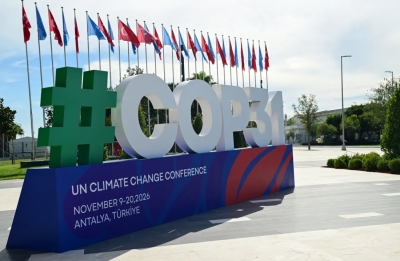








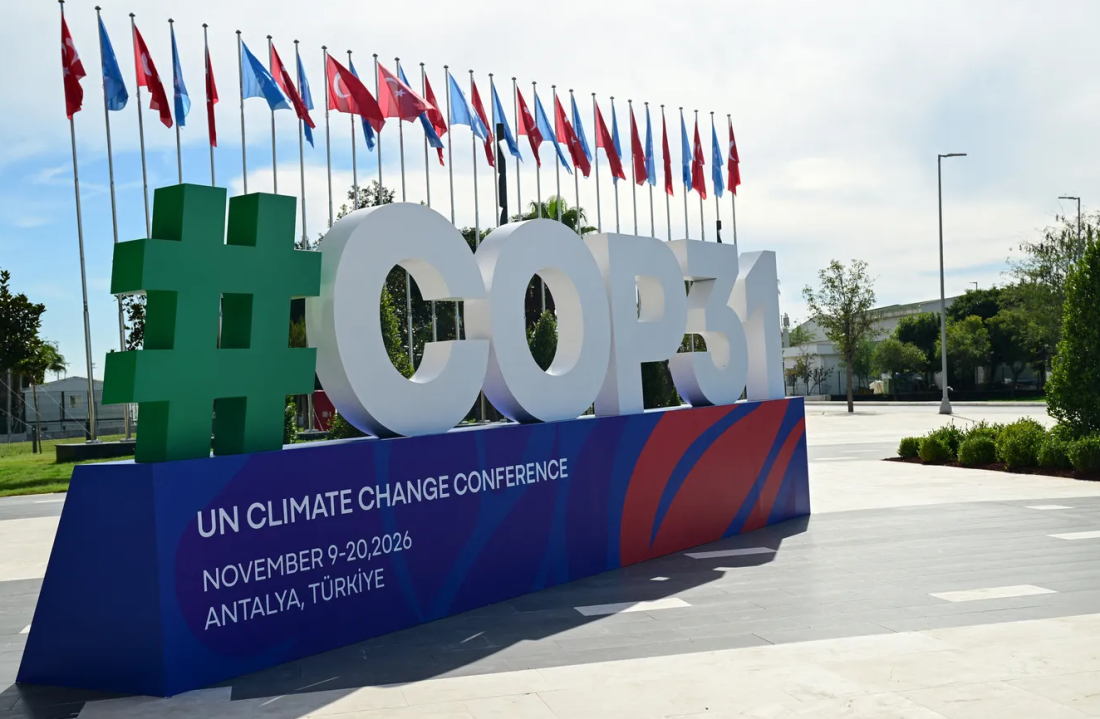


Togo aims to strengthen its climate financing mechanisms and accelerate its ecological transition. Attending COP31, held in Antalya, Türkiye, the country launched three major initiatives on Thursday, November 12: the Togo Green Fund, the digital platform of the National Carbon Registry, and the Togo Zero Waste Programme.
At the heart of this approach is the Togo Green Fund, established by decree in May 2026. This mechanism aims to become a one-stop shop for centralizing and directing public and private financing, both domestic and international, toward projects related to environmental protection and the fight against climate change.
During the climate conference, Lomé also intends to mobilize partners around a portfolio of 43 green projects, with financing needs estimated at $3.97 billion, or approximately 2,330 billion CFA francs. These projects cover several strategic sectors, including sustainable agriculture, agri-food processing, renewable energy, mobility, water, sanitation, coastal protection, forest restoration, and the circular economy.
Beyond financial resources, Togo is also seeking technical and technological partnerships to support the implementation of these projects.
The national budgetary effort also reflects the importance given to environmental issues. In 2026, expenditures identified as beneficial to the climate and the environment amount to 167.7 billion CFA francs, representing 9% of the expenditures examined under the green budget.
The other two announced initiatives focus on carbon governance and waste management. The digital platform of the National Carbon Registry is intended to improve transparency in carbon markets and ensure the monitoring of greenhouse gas emission reduction measures included in the Nationally Determined Contribution (NDC).
For its part, the Togo Zero Waste Programme aims to promote the principles of the circular economy by encouraging more sustainable waste management and better resource recovery.
These announcements follow the review in Lomé of the national greenhouse gas inventory report. Around fifty representatives from public administrations, the private sector, academia, and civil society participated in this exercise. The data collected should notably help better identify the sectors responsible for the highest emissions and adapt national policies to combat climate change.
The launch of these three initiatives is in line with the priorities promoted by Faure Gnassingbé, President of the Council, who attended the World Leaders' Summit on Climate Action held on the sidelines of COP31.
Through these initiatives, Togo aims to increase the attractiveness of its environmental projects, diversify its financing sources, and make the green economy a driver of sustainable development.