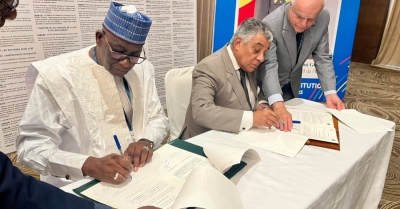








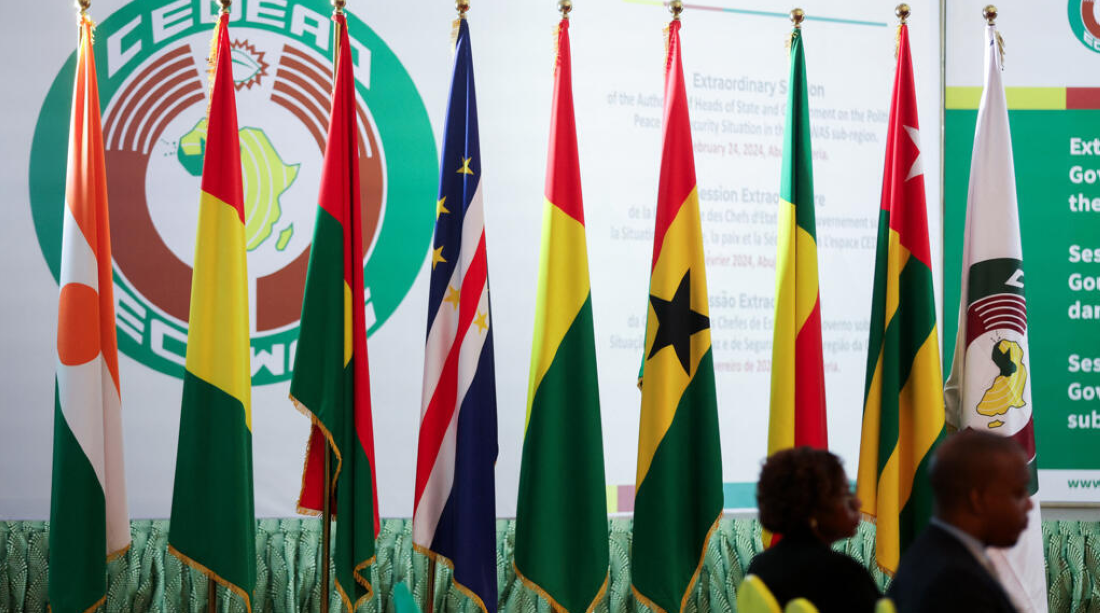


The Summit of Heads of State and Government of the Economic Community of West African States (ECOWAS) witnessed the signing on Sunday in Freetown, Sierra Leone, of the Intergovernmental Agreement (IGA) governing the development of the Nigeria–Morocco Atlantic African Gas Pipeline (AAGP), an energy infrastructure of nearly 6,800 kilometers designed to transport Nigerian natural gas to Morocco, before connecting it to the European gas network.
The signing of the Intergovernmental Agreement marks the accession of ECOWAS member states to the Nigeria–Morocco Atlantic African Gas Pipeline, an initiative launched by His Majesty King Mohammed VI, may God assist Him, and the late former Nigerian President Muhammadu Buhari, with the continued support of current President Bola Ahmed Tinubu.
The project is being developed by Morocco's National Office of Hydrocarbons and Mines (ONHYM) and the Nigerian National Petroleum Company Limited (NNPC Ltd.). This major milestone achieved in Freetown comes ahead of the next implementation stages, including the establishment of the project company, which will be based in Casablanca, as well as the Pipeline Higher Authority, whose headquarters will be located in Abuja, before mobilizing investors and preparing the Final Investment Decision (FID).
This phase will conclude with the joint signing by the Kingdom of Morocco and the Islamic Republic of Mauritania, two non-ECOWAS member states, during a separate ceremony to be held later in the presence of the President of the Federal Republic of Nigeria.
Once completed, the pipeline will cross thirteen countries along Africa's Atlantic coast and will be connected to the Maghreb–Europe Gas Pipeline in northern Morocco.
It will have a transport capacity of 30 billion cubic meters of natural gas per year, with up to 15 billion cubic meters potentially exported to Morocco and Europe, while the remainder will supply regional markets.
Estimated at around $25 billion, the Atlantic African Gas Pipeline aims to create an integrated regional natural gas market in West Africa, while supporting electricity generation, industrialization, and the development of the continent's natural resources.
The first sections of the pipeline are expected to become operational at the beginning of the next decade. Initially launched as a strategic joint initiative between Morocco and Nigeria, the Atlantic African Gas Pipeline has now become a project embraced by the whole of West Africa.
The adoption of the project by ECOWAS member states strengthens its political and institutional foundation while reinforcing the original momentum provided by its two founding countries, which view Africa's energy security as a key driver of sovereignty, industrialization, and shared prosperity. By formalizing the collective commitment of ECOWAS member states, the Freetown Summit confirms the African dimension of the initiative and its central role in the continent's integration policies.
ONHYM and NNPC Ltd. stated that the main technical, environmental, and engineering studies have now been completed, allowing the project to gradually enter its operational development phase, following the signing of the Agreement by Morocco and Mauritania in Rabat.
Beyond its energy role, the infrastructure is intended to serve as a genuine development corridor, linking African economies while strengthening their integration and competitiveness.