









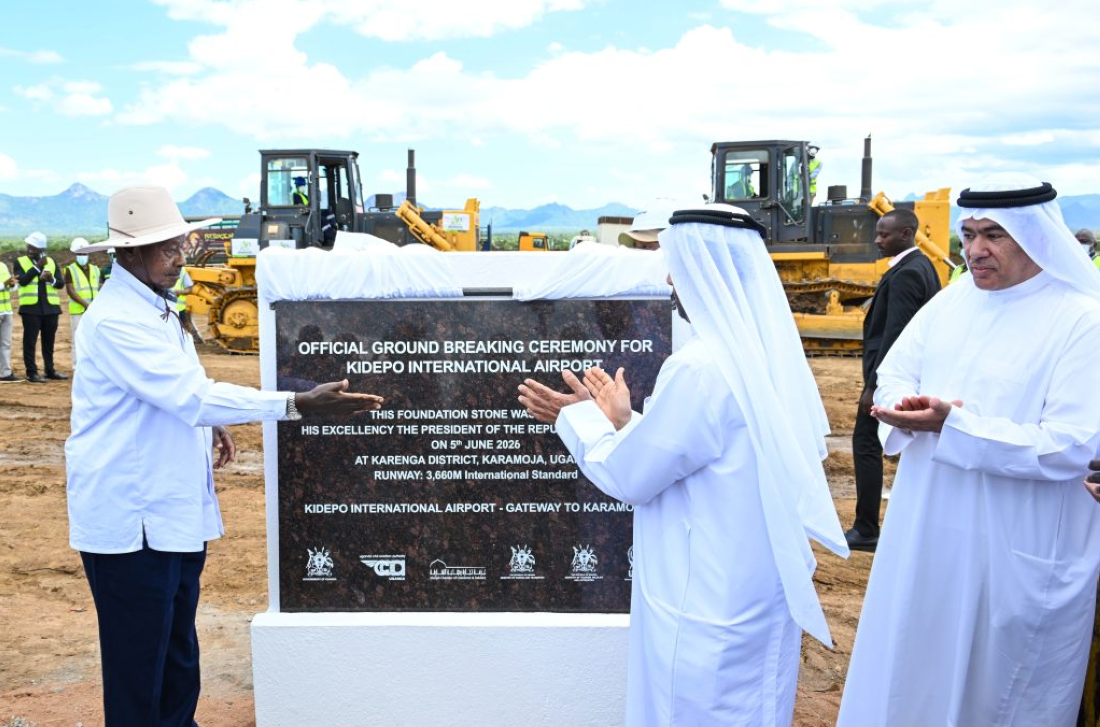


Uganda has officially launched construction of the future Kidepo International Airport, a major infrastructure project aimed at strengthening air connectivity in the northern part of the country and boosting tourism development in this high-potential region.
Valued at 269 billion Ugandan shillings (approximately $72 million), the project will be financed by the Sharjah Chamber of Commerce and Industry as part of a partnership agreement with the Ugandan government. The deal also includes the development of hotel complexes to support the growth of the local tourism sector.
The future airport will feature a 3.6-kilometer main runway capable of accommodating wide-body aircraft, a 7,308-square-meter passenger terminal, and a 74,200-square-meter cargo terminal, significantly enhancing the region’s logistical and commercial capabilities.
The project is intended to unlock the potential of Kidepo Valley National Park, one of East Africa’s most important wildlife reserves and one of Uganda’s premier tourist attractions. Until now, the airstrip serving the area has failed to meet modern aviation standards, limiting opportunities for tourism growth.
The initiative forms part of Kampala’s broader strategy to make air transport a key driver of economic development. In this effort, Uganda Airlines plays a central role. In recent months, the national carrier has undertaken several reforms, including the appointment of Girma Wake as its head and the signing of an agreement with Boeing for the acquisition of ten new aircraft valued at nearly $1 billion.
According to the authorities, tourism remains one of the main pillars of Uganda’s economy. In 2025, the country welcomed more than 1.6 million international visitors, generating approximately $1.62 billion in revenue. The sector contributes 5.9% of national GDP and directly supports more than 876,000 jobs.