










In Ethiopia, injera served with doro wat is one of the country’s most traditional and iconic meals. This unique dish, both simple and rich in flavor, lies at the heart of Ethiopian culinary culture and its spirit of sharing.
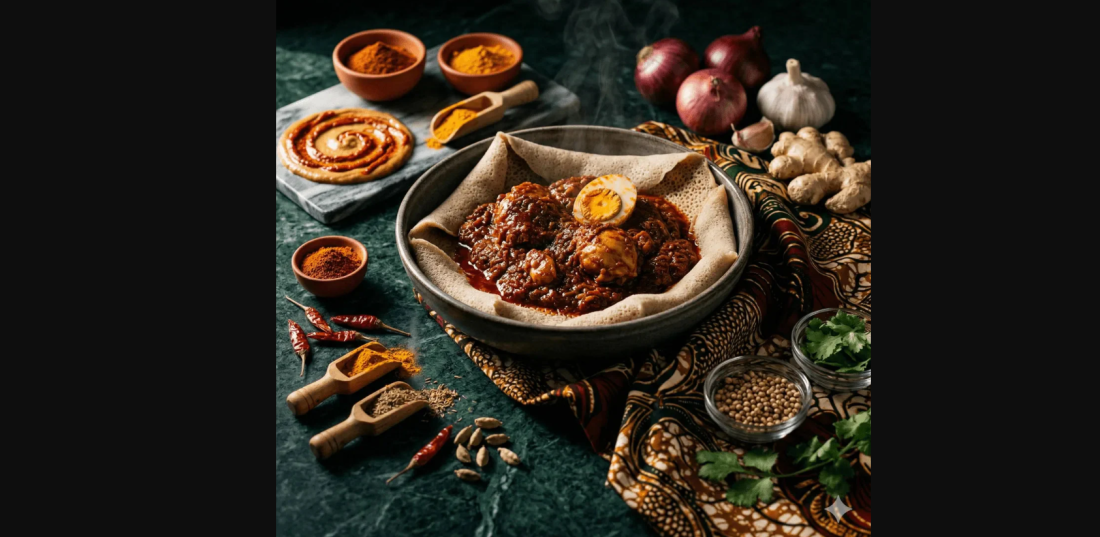
Injera is a large, spongy flatbread with a slightly sour taste, made from teff, a local grain rich in nutrients. It serves both as the base of the meal and as an eating utensil: the dishes are placed directly on top of it, and pieces are torn by hand to scoop up the food.
Among the most famous accompaniments is doro wat, a chicken stew slowly cooked in a spicy sauce made with chili peppers, caramelized onions, and a fermented clarified butter called niter kibbeh. This dish is often considered one of the finest specialties of Ethiopian cuisine.
The meal is usually served on a large shared injera, reinforcing the idea of communal dining. In Ethiopia, it is common to eat without cutlery, using only the hands in a spirit of warmth and togetherness.
This culinary duo is especially present during major celebrations, religious holidays, and family gatherings. It symbolizes both hospitality and the cultural identity of the country.
Beyond its rich and spicy flavors, injera and doro wat represent a true way of life, deeply rooted in Ethiopian traditions and passed down from generation to generation.