







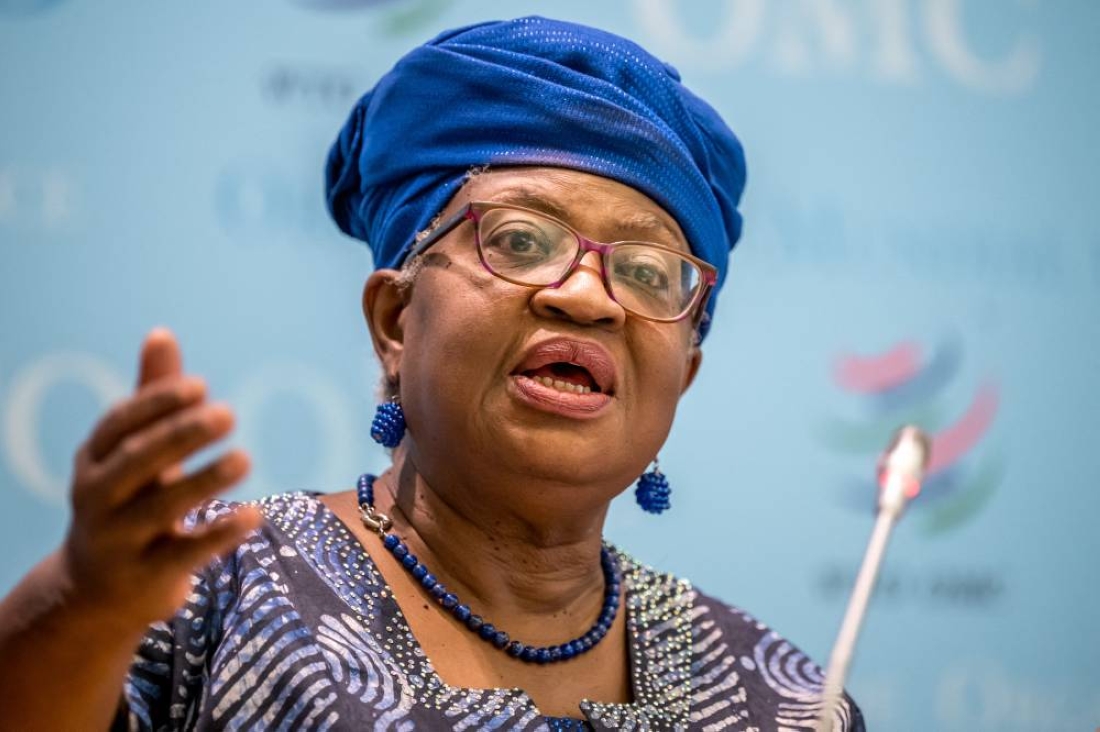


Amid rising protectionist tensions, the fragmentation of global supply chains, and Donald Trump's return to power, Ngozi Okonjo-Iweala's second term at the World Trade Organization (WTO) promises to be tumultuous.
Unanimously re-elected for a second term as Director-General of the WTO, Ngozi Okonjo-Iweala is gearing up to tackle unprecedented challenges in a global landscape characterized by escalating trade tensions and economic transformation. At the crossroads of necessary reforms and geopolitical pressures, the first woman and first African to lead the WTO faces a true test of her leadership.
During the extraordinary session of the WTO General Council held on November 28-29, 2024, Okonjo-Iweala was endorsed by member states to continue her work at the helm of the institution. Her renewed mandate, set to begin on September 1, 2025, reflects recognition of her efforts to maintain the relevance of the WTO in an era shaped by U.S.-China rivalry, global inflation, and the economic aftermath of the COVID-19 pandemic.
In her first term, the former Nigerian Finance and Foreign Affairs Minister distinguished herself through her advocacy for structural reforms. She pushed to make trade rules more inclusive and to enhance the WTO’s role in managing global crises, such as vaccine shortages and controversial fisheries subsidies. However, some observers have criticized the lack of tangible progress on critical issues, particularly the revival of the Appellate Body, which has been paralyzed since 2019 due to the U.S. veto.
Trump's Return: A Sword of Damocles Over Global Trade
Donald Trump's return to the White House in January 2025 poses a major challenge for Okonjo-Iweala. Known for his protectionist stances and open disdain for multilateral institutions, the former U.S. president's comeback could reignite trade wars, particularly between the United States and China. This prospect risks further undermining the WTO, whose role as an impartial regulator of trade disputes is already weakened.
In this context, the WTO must intensify efforts to restore its Appellate Body, which has been inactive for years. This mechanism, essential for resolving disputes, is central to U.S. criticisms of the WTO, accusing it of overstepping national sovereignty. Successfully reactivating this body will not only be a priority but also a critical test of the Nigerian leader's diplomatic skills.
Pressing Issues on the Agenda
Concluding the long-standing negotiations on fisheries subsidies, ongoing for nearly two decades, will remain a key priority. The outcome of these discussions is vital for the organization’s credibility in addressing environmental and economic challenges.
Additionally, the WTO will need to play a leading role in advancing African economic integration, particularly by supporting the implementation of the African Continental Free Trade Area (AfCFTA). This initiative, which has the potential to transform intra-African trade, requires close coordination between international institutions and governments.
As Ngozi Okonjo-Iweala embarks on her second term, her ability to navigate geopolitical turbulence while spearheading vital reforms will determine the WTO's relevance in a rapidly evolving global trade landscape.