








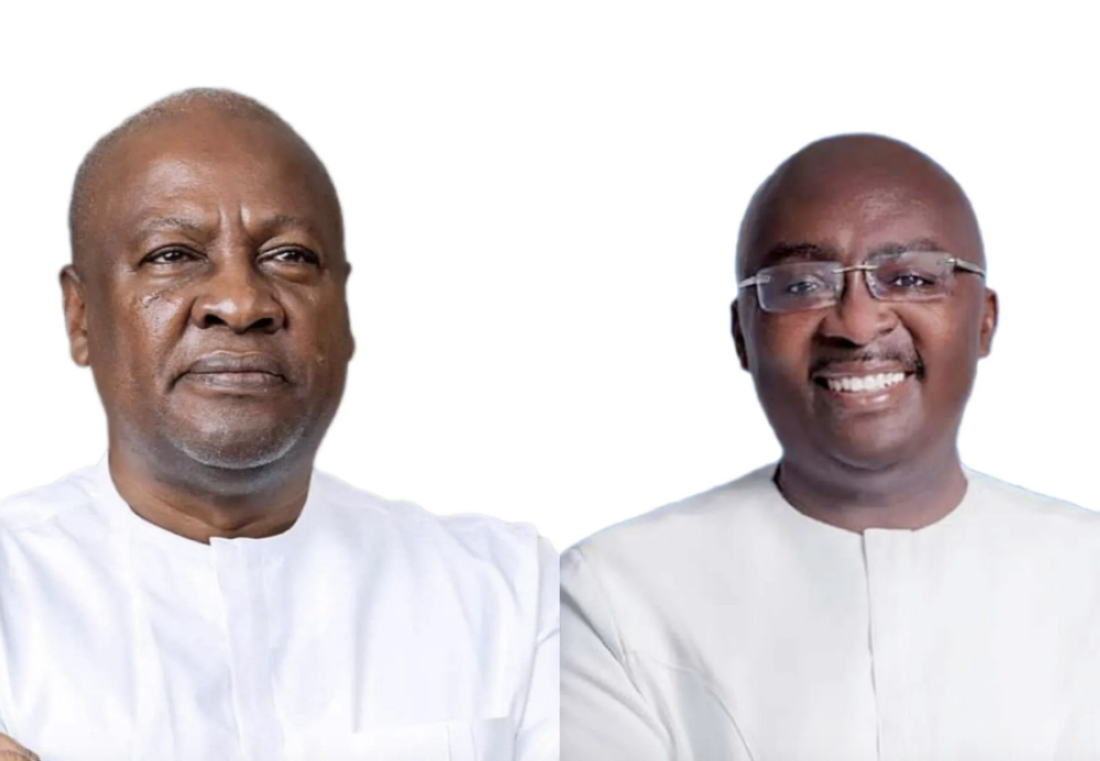


As the electoral campaign intensifies in Ghana, John Dramani Mahama appears to have a slight edge over his rival, especially due to his experience as a former president. However, the race promises to be thrilling.
Ghana is gearing up for a decisive presidential election scheduled for December. Voters will have to choose between Mahamudu Bawumia, from the ruling New Patriotic Party (NPP), and the National Democratic Congress (NDC) candidate, John Dramani Mahama. In a challenging economic context and with high public expectations, both contenders have outlined their priorities, each aiming to address the most pressing concerns of the Ghanaian people. While Mahama, a former president and opposition leader, seems well-positioned for victory, several key issues will influence voters’ choices.
Unemployment, especially among young people, is at the forefront of voters’ concerns. According to recent polls by Afrobarometer and Global InfoAnalytics, 41% of Ghanaians consider job creation as the top priority. This statistic, echoed by the NCCE, highlights the frustration of young people aged 20 to 39 with the scarcity of employment opportunities. Despite Bawumia’s administration’s initiatives, such as the "One District, One Factory" program aimed at boosting local employment, results are seen as insufficient by a significant portion of the population.
In contrast, John Dramani Mahama, leveraging his past experience, has pledged to intensify efforts to introduce new employment programs, particularly in the industrial and agricultural sectors. Through his message, he seeks to capture the attention of young voters, who represent a decisive electoral force.
Infrastructure, particularly road improvements, is another crucial issue in this campaign. According to Afrobarometer, 38% of respondents believe that improving road infrastructure should be a priority. In response to this demand, Mahama has expressed his intention to redevelop existing infrastructure, especially in rural areas suffering from significant deterioration. Bawumia, on the other hand, defends his government’s record on infrastructure, highlighting ongoing projects aimed at enhancing connectivity and supporting the country’s economic growth. However, these projects remain under scrutiny by the opposition, which argues that they are insufficient given the scale of needs, particularly in rural areas.
The Sticking Point
The economy remains the most sensitive issue of this campaign. With soaring inflation, a decline in the cedi's value, and economic insecurity particularly affecting the lower classes, 74% of Ghanaians express dissatisfaction with the current government’s economic management, according to Global InfoAnalytics. Mahama directly addresses this issue by promising ambitious tax reforms to relieve pressure on citizens, especially women, who are disproportionately affected by rising prices.
Bawumia, meanwhile, emphasizes his efforts to stabilize the currency and revive the economy, but he faces strong criticism regarding the effectiveness of his short-term measures. In this context, economic management could well be the election's deciding factor, as voters seek tangible solutions to improve the situation and restore financial stability to the country.
At first glance, John Dramani Mahama seems to have a slight advantage over his rival, primarily due to his experience as a former president and his pragmatic approach to addressing the country’s issues. He stands in firm opposition to the current administration and proposes a program focused on social services, infrastructure improvement, and reducing economic inequalities. His promises of reforms in employment, healthcare, and education have resonated with a population eager for change.
However, Bawumia remains determined to defend his track record. The outcome of this election will thus depend on the ability of both candidates to meet voters’ expectations effectively and concretely on these critical issues.