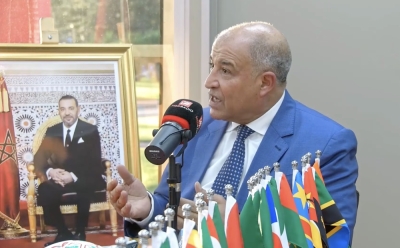











Kassim Ahmed Ibrahim, the national operations coordinator of the Nigerian Association of Road Transport Owners (NARTO) and the first vice president of the African Union of Transport and Logistics (UAOTL), discusses the major challenges and upcoming opportunities for the transport sector in Africa.
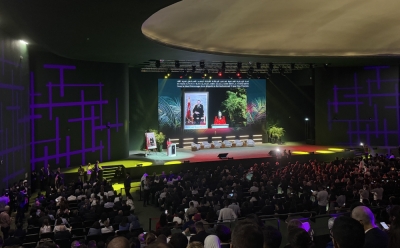
“If we are here today for the first UAOTL congress, it is as founding members of the Union. In 2018, I was one of the representatives from the 11 countries that created this Union in Morocco. Today, more than 37 countries are represented, which reflects the growing commitment of African states to unite in improving our transport sector,” said Kassim Ahmed Ibrahim, national operations coordinator of NARTO and first vice president of UAOTL, to L’Observateur du Maroc et d’Afrique, on the sidelines of Logiterr 2024.
According to him, transport and logistics in Africa face specific challenges: “Each country and continent has its own particularities. What is true in Morocco is not necessarily true in Kenya. Similarly, the challenges we face in Africa are not comparable to those in the United States or Europe. However, two major issues affect many African countries: a lack of adequate infrastructure and insufficient coordination between member states to facilitate trade and economic development.”
UAOTL, created to strengthen cooperation between African nations, strives to overcome these obstacles. “I am convinced that with the commitment of African leaders and the ongoing discussions within the Union, we will resolve these challenges as quickly as possible,” he emphasized, while highlighting the continent’s immense potential: “Africa is not a poor continent; it is full of human and material resources. We have the skills and experience needed to drive our development.”
He also stressed that regional integration is crucial to positioning Africa on the path to self-sufficiency: “Since its creation in 1963, the African Union has been committed to promoting economic integration. Today, this vision is more relevant than ever, and we must fully embrace it.”
For Kassim Ahmed Ibrahim, one thing is certain: “With better cooperation and modernized infrastructure, Africa is capable of meeting the challenges of transport and logistics and establishing itself as a major player on the global stage.”