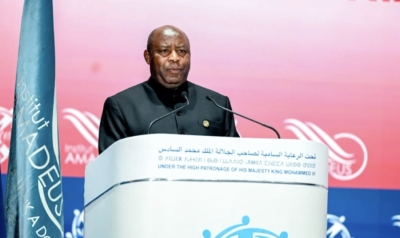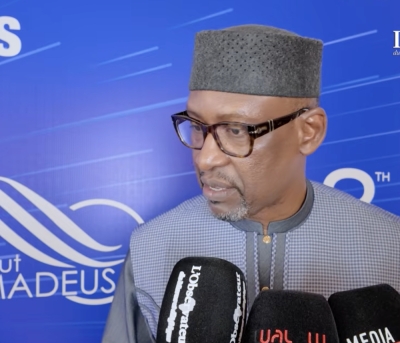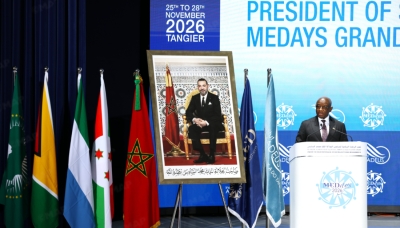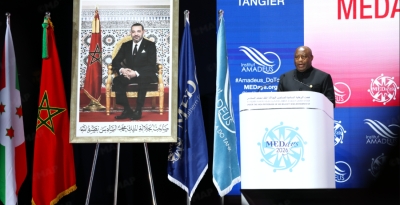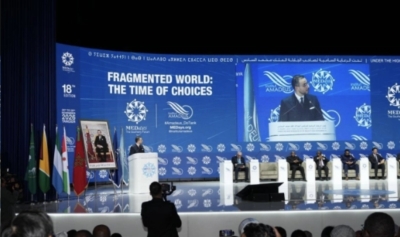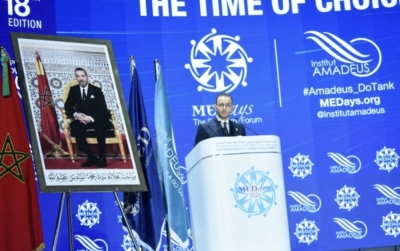








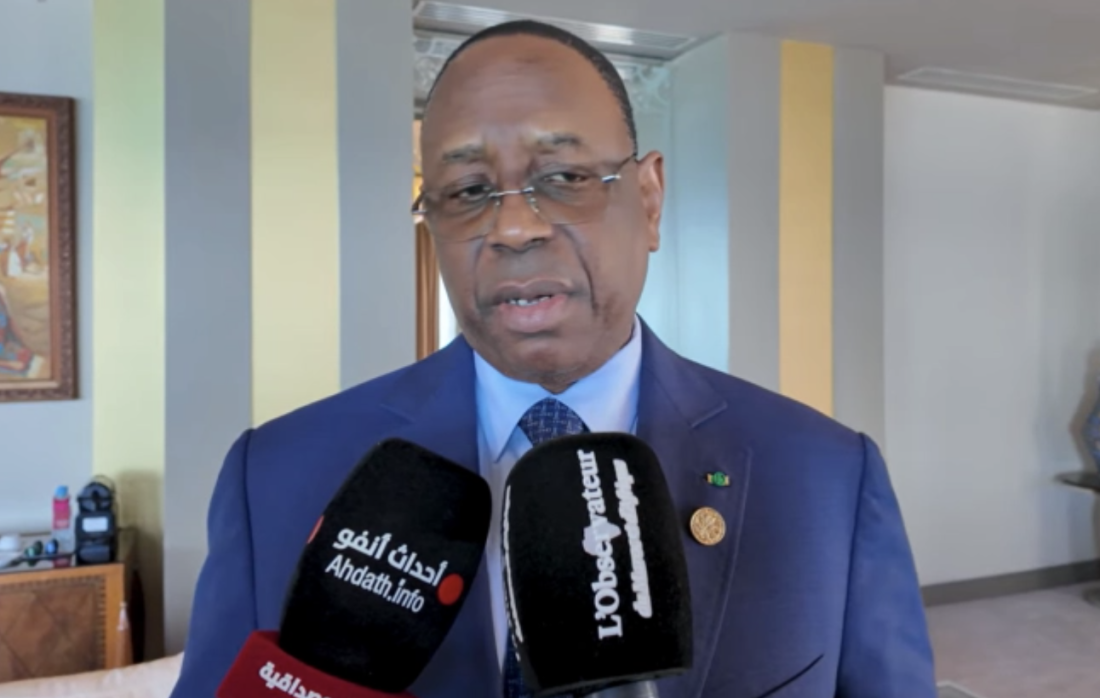


In an interview on the sidelines of the MEDays 2026 Forum, former Senegalese President Macky Sall discusses the historic partnership between Morocco and Senegal, Morocco’s role in bringing the continent’s economies closer together, and major infrastructure projects, including the Morocco–Nigeria gas pipeline.
Drawing on his experience as Chairperson of the African Union and his candidacy for UN Secretary-General, he also advocates a more united Africa capable of exerting greater influence on the international stage.
L’Observateur du Maroc et d’Afrique: In a fragmented world, what place should Africa occupy today?
Macky Sall: Africa must occupy a central place. But securing that place requires a fight, because we live in a ruthless world. Nations seek to dominate. At one point, we lived in a unipolar world. Today, China has helped rebalance the distribution of power, while Europe is holding its ground.
But Africa must form a significant bloc. We have the natural resources and the population to do so. What we often lack is capital and political unity. We have the African Union, which is already an important step. But to be more effective, its work must enable us to come to the negotiating table with a single position on major issues, particularly peace on the continent, the economy and debt.
Africa’s combined economic weight is far from negligible. But when we act as individual countries, we carry little weight, because we are 54 separate entities. Coming together is therefore essential, and we must recognise the continent’s collective strength.
Not all partners facilitate this unity, but it is up to us, as Africans, to recognise its importance and work to strengthen it. That begins with trading among ourselves and building greater unity.
We have already established frameworks, including the African Continental Free Trade Area and NEPAD for the continent’s major infrastructure policies. We need to trade more with one another, communicate more and develop intra-African investment. Progress is already being made, but we must accelerate the momentum.
Morocco and Senegal enjoy strong, historic ties. What opportunities exist to further strengthen their economic relations?
Relations between Morocco and Senegal are historic and of exceptional quality. Any relationship can be strengthened, but this one is already excellent. Nevertheless, we must consolidate it in economic relations, trade and investment. There are quite a few joint projects, and we must continue these exchanges for the benefit of both sides.
I believe the work of Moroccan companies deserves recognition. The private sector also drives development. Governments establish the framework, but for it to work, it needs participants. Those participants are entrepreneurs and the private sector.
Through cooperation agreements, governments establish the framework within which our businesses operate, particularly in finance, insurance, agriculture, energy and transport. There is considerable momentum in all these areas between Morocco and sub-Saharan Africa in particular. We must sustain this effort.
I always commend Morocco’s proactive approach. You are the only country in Africa with a high-speed train, the TGV. In Senegal, I also had the pleasure of building a fast rail service—not a TGV, but an electric regional express train, the TER, which runs at 160 km/h. We need more infrastructure of this kind across the continent.
We must develop railways in Africa and open up the continent’s landlocked regions. We must also continue our efforts in energy, particularly renewables, but also all other forms of energy. Nor should we be made to feel guilty about developing our domestic resources, whether oil, gas or renewable energy sources such as solar, wind, hydropower and geothermal energy.
All the energy available on the continent must be harnessed to provide enough electricity for our people. Today, 600 million Africans still live without access to electricity. They must be able to access this common good. We have much to do together. I believe these discussions provide an opportunity to revisit all these issues. For my part, I am confident about the continent’s future.
How do you view Morocco’s role in African integration, particularly through the Morocco–Nigeria gas pipeline project?
The King has demonstrated his determination and commitment to offering a concrete response to African economic integration. The gas pipeline network linking Nigeria to Morocco is a major project, notably within the NEPAD framework. It provides a means of transporting natural resources, particularly gas, which has become a highly strategic energy source.
Africa has substantial gas resources. My country, which previously produced neither oil nor gas, began producing both in 2024. Mauritania is also undergoing this development. I remain hopeful, moreover, that deposits will soon be discovered in the Atlantic off Morocco, or even in the Mediterranean.
Drawing on your experience as Chairperson of the African Union and your candidacy for UN Secretary-General, how do you assess the diplomatic power dynamics the continent continues to face?
Navigating the balance of power is a constant struggle for states, because the world is marked by one thing: the desire to dominate. Every country wants to dominate; every continent wants to dominate.
Africa has suffered greatly throughout history. We have endured extremely difficult periods. We must remember slavery: four centuries during which the continent suffered the horrors of the triangular trade.
This was followed by a century and a half of colonisation, during which our resources were seized by force and our people subjugated. I am not here to lament, but simply to say that the course of history has not favoured Africa.
Then came independence, following the struggles for emancipation. But independence also showed us that the challenges were far from over. We had to work within a system that already existed and had been designed before we became independent. It is the system we know today: the multilateral system, the United Nations and the Bretton Woods institutions.
Our struggle is precisely to ensure that our presence in these institutions carries weight, so that we can help change certain rules and gain access to financing on normal terms.
We are not asking for charity. Personally, I do not believe in official aid. I believe we are simply asking for access to normal financing terms, like everyone else.
It is not normal for Europeans to borrow at 3% or 4% while we have to borrow at 15%. Naturally, that creates a heavy repayment burden—a weight we will continue to carry.
That is the fundamental problem with the international financial architecture, which we are calling to reform, and we will continue to do so.
It is therefore up to Africans to fight and believe in their abilities. Twenty or thirty years ago, China was not what it is today. It had to fight. It endured a century of domination, but through hard work, self-sacrifice and conviction, it fought to take charge of its own development.
Today, it is described as the world’s second-largest economy. That shows we must accept that only work will enable us to move forward. Lamenting will not. We will not get there by crying or complaining.
Let us get to work and talk a little less. Let us fight to improve our people’s daily lives. We will inevitably have differences, but they must not obstruct our struggle for development, because it is a struggle for dignity.