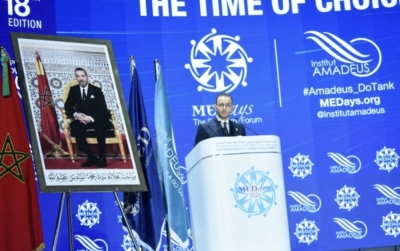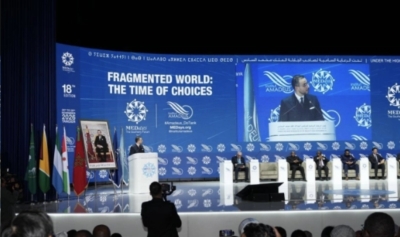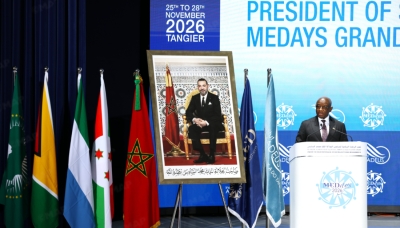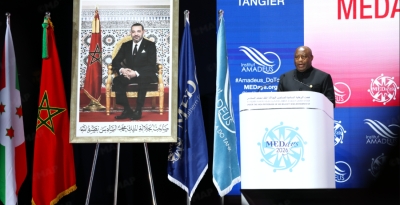








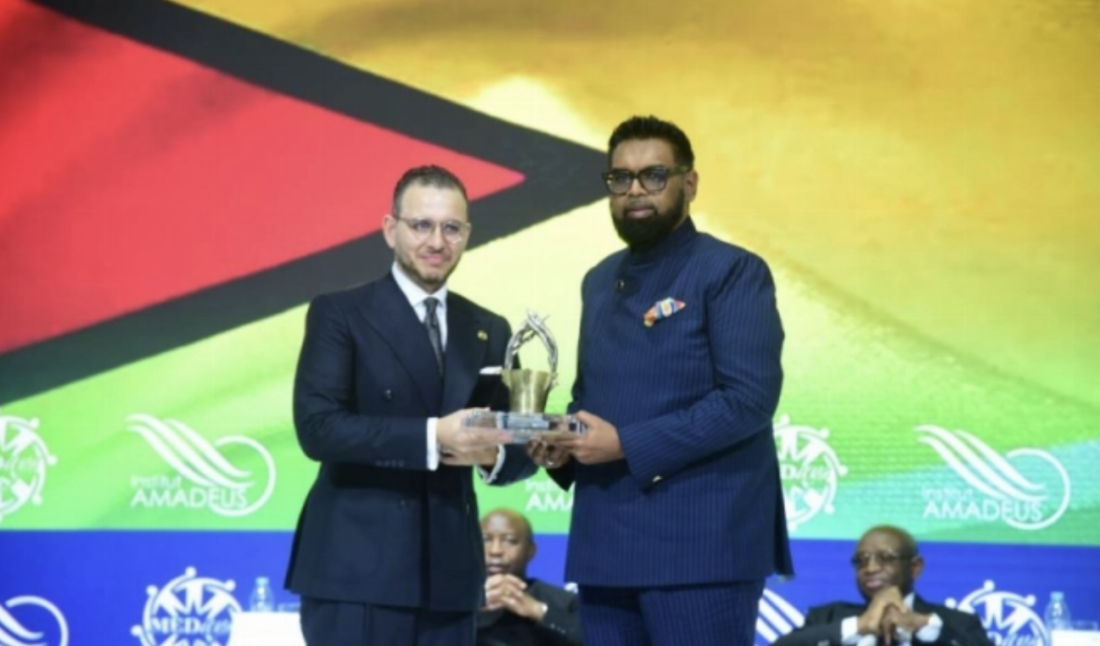
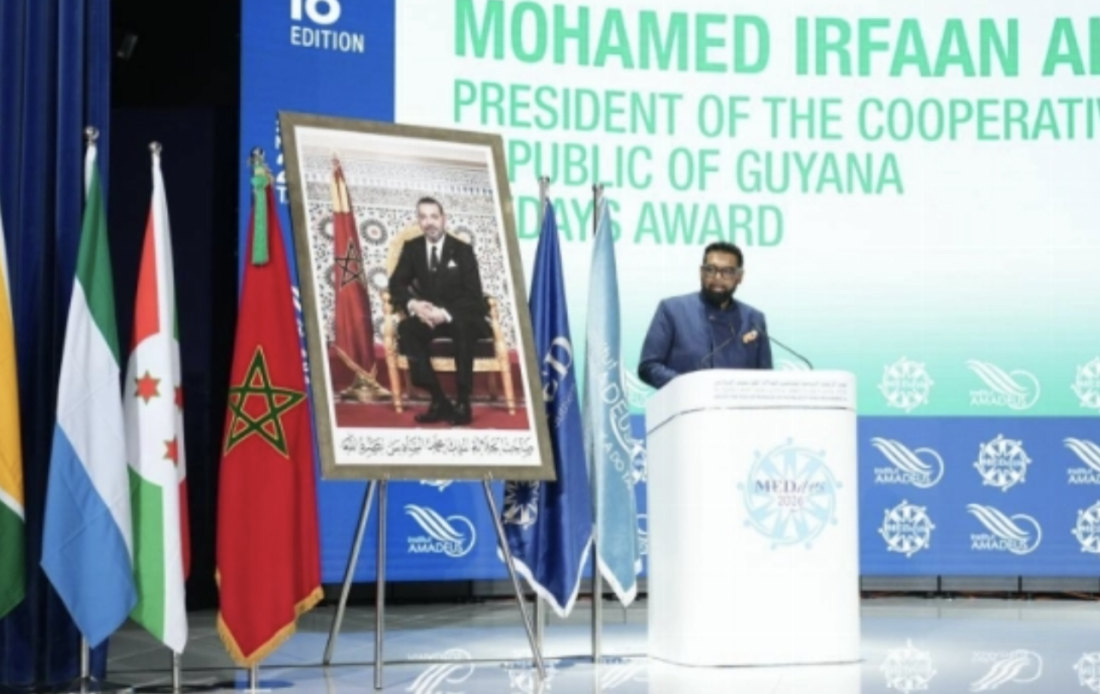


At the opening of the MEDays Forum, the President of Guyana highlighted the potential for expanding relations with Morocco, particularly in trade, investment and major infrastructure. He also underscored Morocco’s logistics expertise and the potential of Tanger Med, while calling for closer ties between countries of the Global South to translate into concrete economic projects.
Guyana’s President Mohamed Irfaan Ali highlighted an economic paradox: Africa, the Caribbean and Latin America hold a substantial share of the world’s natural resources, yet their role in international trade remains limited. Addressing the opening ceremony of the MEDays Forum, he urged these three regions to embrace a new paradigm and turn their potential into wealth generated within their own territories.
To illustrate this imbalance, he noted that Africa holds nearly 30% of the world’s mineral reserves and 10% of its renewable freshwater resources, yet accounts for only 2.6% of global merchandise exports and 1.8% of commercial services exports. Latin America and the Caribbean, which together hold 40% of global biodiversity and one-third of the world’s freshwater resources, account for just 5.7% of merchandise exports and 3.2% of commercial services exports.
For the Guyanese president, this situation reflects a persistent difficulty in moving beyond primary production towards industrial processing and value creation. “We have failed to move from primary production to value creation,” he observed, arguing that this weakness prevents these economies from making full use of their strengths.
He therefore called for a new phase of cooperation based on action, greater scale and more effective mobilisation of financial and human resources. In particular, he believes countries of the Global South should draw more extensively on their own capital, pension funds and investment capacity to finance their development.
Partnerships Focused on Concrete Projects
Beyond this assessment, Mohamed Irfaan Ali stressed the need to give South-South cooperation an operational dimension. He proposed, in particular, building a portfolio of economically viable projects in three priority areas: energy, agriculture and environmental protection.
His approach involves bringing investors, producers, buyers and financial institutions together around shared projects. The aim is to assemble the technical expertise, financing and commercial partners needed to move from intentions to implementation.
In his view, energy offers significant scope for cooperation. The president referred to the energy access needs of more than 500 million people in Africa, as well as the investment required to strengthen electricity grids in Latin America. Mineral processing, manufacturing development and agro-industry are also among the sectors capable of generating fresh economic momentum.
Another major challenge is the digital revolution. With artificial intelligence expanding rapidly, the Guyanese president called on countries of the Global South to pool their technologies, develop skills and strengthen their capacity for innovation. The aim, he said, is to prevent this latest technological transformation from further widening development gaps.
South-South Cooperation as a Driver of Economic Sovereignty
Against an international backdrop of geopolitical tensions, protectionist policies and supply chain vulnerabilities, Mohamed Irfaan Ali advocated diversifying partnerships. He believes multipolarity need not lead to global fragmentation and could instead pave the way for a more inclusive international order.
For smaller economies, diversification is also a matter of sovereignty. Dependence on a single market, supplier or source of financing weakens their ability to determine their own development priorities.
The president nevertheless stressed that stronger South-South relations do not mean disengaging from economies of the Global North. Rather, the objective is to broaden opportunities for cooperation and gain greater negotiating room with all international partners.
He therefore called for a more structured economic relationship between Africa and the Caribbean, expanded to include the opportunities offered by Latin America. Through its geographical position linking the Caribbean and South America, Guyana intends to serve as a bridge between these regions.
Morocco: A Potential Partner
Closer ties with Morocco also form part of this approach. Mohamed Irfaan Ali emphasised the development of bilateral relations and expressed his determination to deepen them, particularly in investment, trade and infrastructure.
The two countries, he said, share interests in environmental protection, biodiversity, human capital development and technology. He wants this convergence to translate into economic partnerships and investment projects.
The Guyanese president specifically cited Morocco’s experience in logistics and transport, highlighting the capabilities of Tanger Med, which handled 161 million tonnes of cargo in 2025. He also discussed plans to build a deepwater port in Guyana, describing it as strategic infrastructure that would improve South America’s connections with the Caribbean and international markets.
Maritime and air connectivity, cross-border payment systems and digital infrastructure are therefore among the areas identified for potential cooperation. Bilateral trade between Morocco and Guyana remains modest, but the president believes there are real prospects for expanding exchanges.
Mohamed Irfaan Ali called for MEDays to become a platform for turning partnerships into reality. He hopes future editions will showcase structured investment projects with identified partners, clear timelines and well-defined financing mechanisms.
He proposed, in particular, that each initiative be monitored to assess progress, identify obstacles and adjust commitments. “Credibility comes from this willingness to be accountable for the commitments we make,” he concluded.