










Due to torrential rains, the cocoa harvest is expected to be low. Producers, like Siaka Sylla, who heads a well-known cooperative in Ivory Coast, foresee one of the worst harvests recorded in the country in about thirty years. Seasonal workers also fear for their income. Report.
"For thirty years that I've been in cocoa, this is the worst season." In southern Ivory Coast, Siaka Sylla looks disheartened at the nearly empty warehouse of his cooperative: after exceptionally heavy rains, the harvest of the world's leading producer is expected to be very low.
On this warm November morning, a few trucks arrive from plantations to deposit a few dozen bags of cocoa beans at the Scapen cooperative in the village of Hermankono, near Divo.
"It has rained too much this year! Usually at this time, trucks line up to unload! Here, we have barely 200 bags when we can store ten times more," laments Mr. Sylla, president of the cooperative, which brings together nearly 1,500 planters.
The producers expect a harvest three to four times smaller than last year.
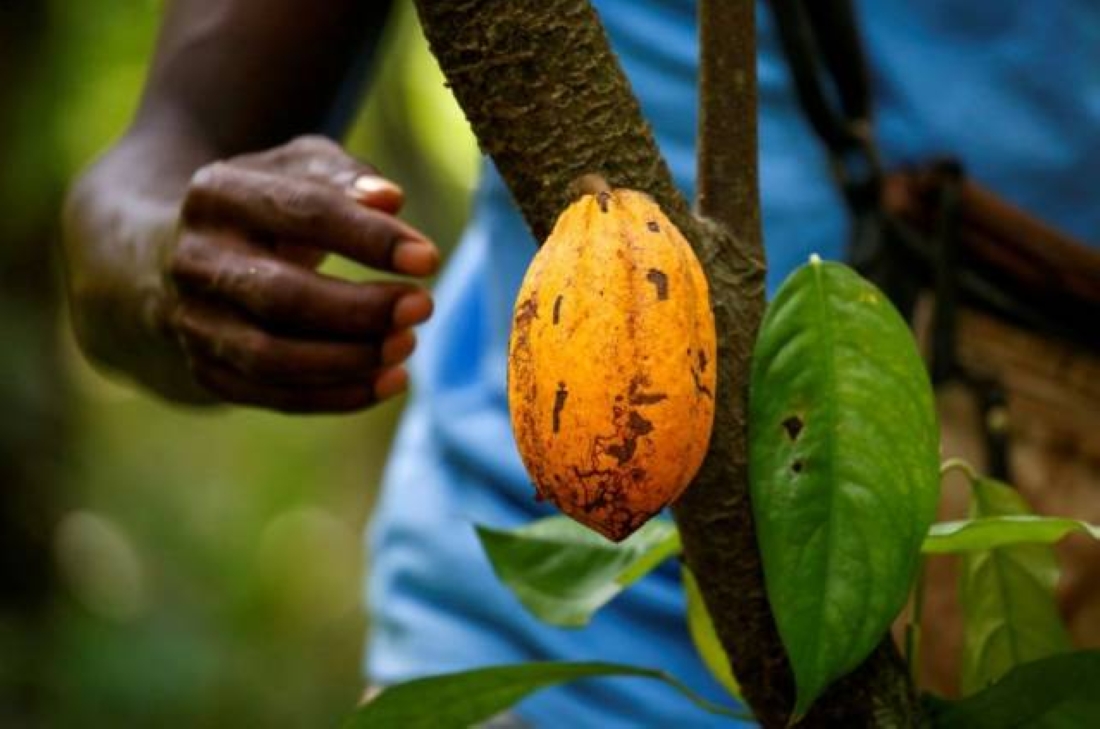
In the cocoa fields, the observation is confirmed. Along a track where only motorcycles can maneuver, Bamoussa Coulibaly harvests a few rare yellow-red pods from the numerous cocoa trees.
This year, July was particularly rainy in southern Ivory Coast, right at the time of cocoa flowering, and "the flowers fell," explains this agricultural worker to justify his meager harvest.
And among the pods that resisted, some rotted, again due to excessive humidity.
In some areas, the rainfall recorded since the beginning of the year has been 20 to 40% higher than the average from 1991 to 2020, according to the figures from the Ivorian meteorological agency Sodexam.
However, cocoa needs a subtle alternation between sunshine and precipitation to fully thrive.
A few kilometers from Hermankono, in the nearby bush of N'Douci, Monique Koffi Amenan wades through a marshy field, a vestige of the unusual precipitation that caused the neighboring watercourse to overflow for several weeks.
"This year, what we harvested won't even fill one bag, instead of two bags normally. The rain has rotted the cocoa," explains this forty-year-old who has been working this field with her husband for ten years.
"We had planned for a 20% decrease compared to last year, and our forecasts are confirming. With the heavy rains, many pods have rotted," confirms Yves Brahima Koné, head of the Coffee-Cocoa Council (CCC), the sector's regulatory body in the country.
As the leading producer, Ivory Coast supplies about 40% of the world's cocoa. Since July, anticipating a bad year, it has suspended the sale of export contracts.
Cocoa prices are breaking records on financial markets.
In London, a ton of cocoa peaked at £3,478 on November 10, a record since 1989, while in New York, it surpassed $4,000, the highest since the end of 1978, or 45 years.
After the rains, the situation could remain critical, as the resurgence of the El Niño climate phenomenon raises fears of prolonged drought periods in West Africa.
"It's proof that climate change is hitting developing countries harder," asserts Ivorian economist Séraphin Prao.
But while waiting for a possible repetition of the phenomenon next season, producers worry about their short-term finances.
In Ivory Coast, the government sets the purchase price of cocoa at the field edge. At 1,000 francs per kilogram (1.5 euros), it is higher this year than in the last few seasons, but the low volumes will result in a loss for many families.
According to the World Bank, cocoa provides income to one-fifth of the Ivorian population.
"My children go to school, one is entering the 6th grade and another is taking the BTS. But if cocoa doesn't produce, what are we going to do?" worries Monique Koffi Amenan.
"In a liberalized system, the growers would be winners in the current context because cocoa is reaching record levels. In Cameroon, for example, where the price is not set by the state, a kilo of cocoa sells for twice as much," emphasizes Séraphin Prao.
Back at the Hermankono cooperative, Siaka Sylla still wants to believe that the intermediate harvest, which takes place in April, will be better. "But it won't make up for the loss," he sighs.