









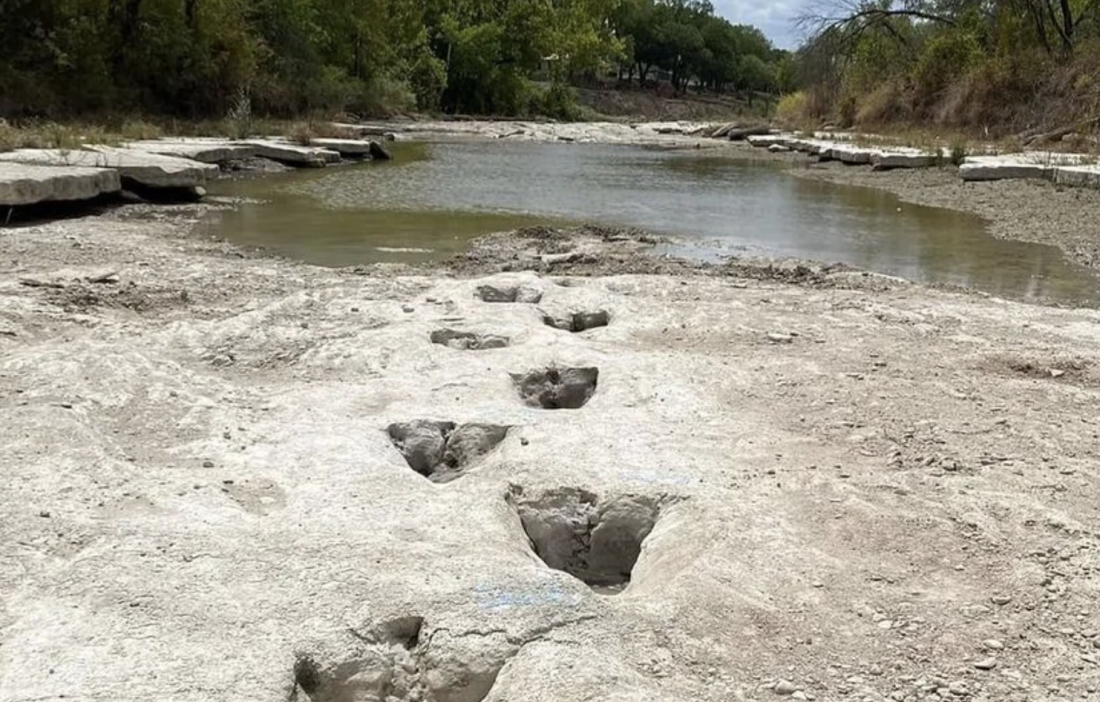


New dinosaur tracks were recently uncovered in Knysna, in the Western Cape province, a discovery that suggests these animals survived much longer in southern Africa than previously believed, according to a team of scientists.
“The discovery was made by a team of ichnologists — scientists who study footprints and fossil traces — during fieldwork conducted along the Western Cape coastline at the beginning of 2025,” reported The Southafrican newspaper on Friday.
The dinosaur tracks are estimated to be around 132 million years old and date back to the Early Cretaceous period, making them about 50 million years younger than those discovered in the interior Karoo Basin (a vast semi-desert region in the heart of South Africa).
Scientists believe the tracks were left by a mix of dinosaurs, including carnivorous theropods and herbivorous ornithopods or sauropods. According to researcher Charles Helm, “a more detailed examination of the deposits revealed more than two dozen probable footprints.”
Rather than overinterpreting the tracks, the researchers focused on confirming their age and significance. The key conclusion is clear: dinosaurs were present in the Knysna area much later than previously thought.
This discovery follows another major breakthrough in 2025, when 140-million-year-old dinosaur tracks were reported elsewhere along the Western Cape coast.
Researchers say the Knysna tracks strengthen the case for systematic research in other Cretaceous rock outcrops in the two provinces.