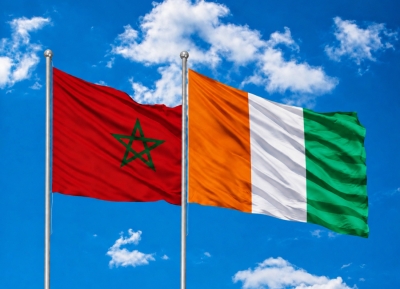








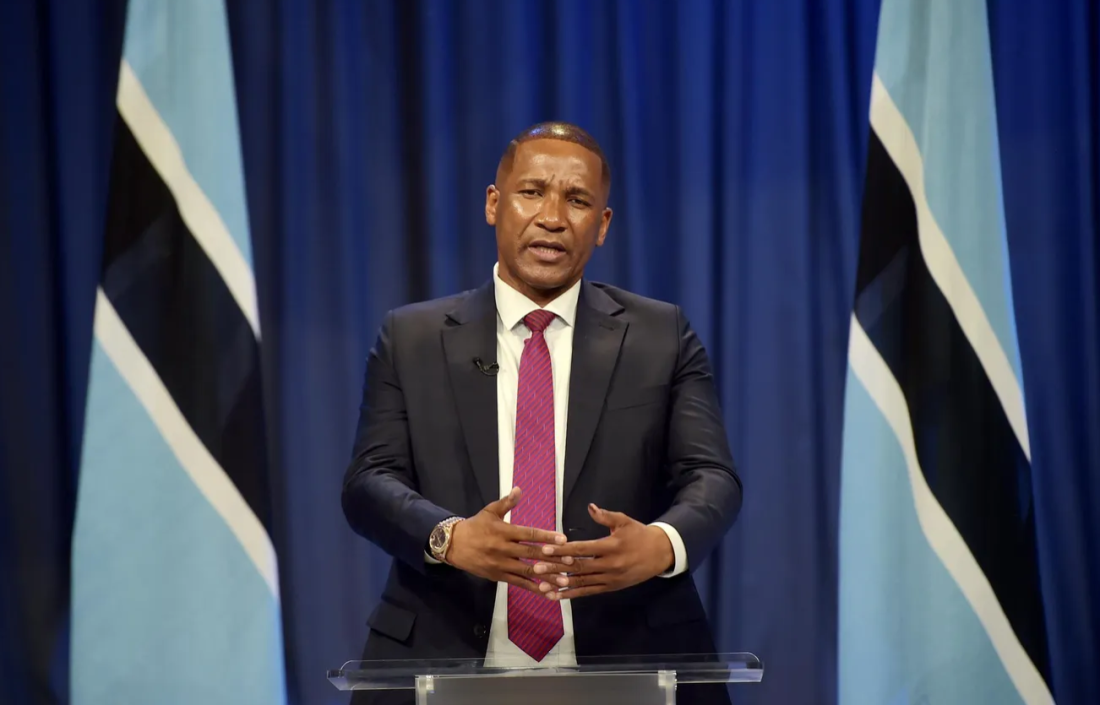


Botswanan President Duma Boko on Monday called on African countries to intensify trade among themselves to reduce their dependence on external markets and better withstand international crises. The appeal was made in Abidjan during a state visit to Côte d'Ivoire, marked by the signing of several economic cooperation agreements, particularly in the mining sector.
A major diamond producer, Botswana is also the guest of honor at SIREXE 2026, the International Exhibition of Extractive and Energy Resources, held from November 18 to 22 in Côte d'Ivoire's economic capital.
During a joint press conference with Ivorian President Alassane Ouattara, Duma Boko emphasized the urgent need to address the low level of trade between African countries. He called on the continent's nations to remove obstacles hindering trade and avoid unnecessary barriers to the movement of goods.
For the Botswanan head of state, strengthening intra-African trade would enable the continent to better absorb the consequences of international geopolitical and economic crises, particularly tensions surrounding the Strait of Hormuz and the war between Russia and Ukraine.
Officially launched in 2021, the African Continental Free Trade Area (AfCFTA) aims to establish a vast integrated market by facilitating trade in goods and services between African countries. However, its implementation continues to face numerous obstacles that still hinder the free movement of goods and people.
Duma Boko's visit was also marked by the conclusion of several agreements between Abidjan and Gaborone, particularly in the mining sector. On this occasion, Alassane Ouattara invited Botswanan investors to seize the opportunities offered by Côte d'Ivoire's extractive industry.
Botswana intends to draw on its experience in mining and natural resource management. “Botswana will contribute its extractive expertise and mineral resource management capabilities,” Duma Boko assured.
This cooperation is of strategic importance to both countries. In Botswana, the economy remains heavily dependent on the diamond industry, which accounts for approximately 30% of gross domestic product and 80% of exports, according to the International Monetary Fund (IMF).
In response to changes in the global market, Duma Boko also called for greater recognition of the origin and social impact of African raw materials. According to him, buyers are no longer interested solely in product quality but also want to know where products come from, which communities are involved in their production, and what economic benefits they bring to local populations.
For its part, Côte d'Ivoire is seeking to diversify its economy by developing its extractive industry. Already known for its cocoa and cashew nut production, the country is experiencing rapid growth in its mining and energy sectors, driven in particular by discoveries of oil, gas, gold, coltan and manganese.
Through this rapprochement, Abidjan and Gaborone are demonstrating their determination to strengthen South-South partnerships and make natural resources a driver of economic development across the continent.