










Sub-Saharan Africa’s economy is expected to continue expanding in 2026, with growth projected at 4.3%, compared with 4.1% in 2025. This improvement reflects a degree of resilience in the region, but remains insufficient to significantly reduce poverty and absorb the massive influx of new workers into the labor market.
In its latest semiannual economic report on Sub-Saharan Africa, the World Bank raised its growth forecast for 2026, published in April, by 0.3 percentage points.
This improvement is notably driven by greater macroeconomic stability, stronger domestic demand and increased investment in strategic sectors such as the energy transition and digital technologies.
Improved Outlook in Several Economies
The momentum appears relatively broad-based, as nearly three-quarters of Sub-Saharan African countries have benefited from upward revisions to their growth outlook. These include Angola, Ethiopia, Nigeria and Zambia.
“Despite a challenging global environment, economic activity in Sub-Saharan Africa continues to demonstrate remarkable resilience,” said Andrew Dabalen, the World Bank’s Chief Economist for the Africa Region.
But behind this performance lies a more worrying reality: the pace of growth remains too weak to meet the continent’s social and demographic needs.
The region must create a considerable number of jobs every year to respond to the rapid growth of its working-age population. It must also contend with declining development aid, geopolitical tensions, climate shocks and increasingly limited fiscal space.
Artificial Intelligence as a New Growth Driver
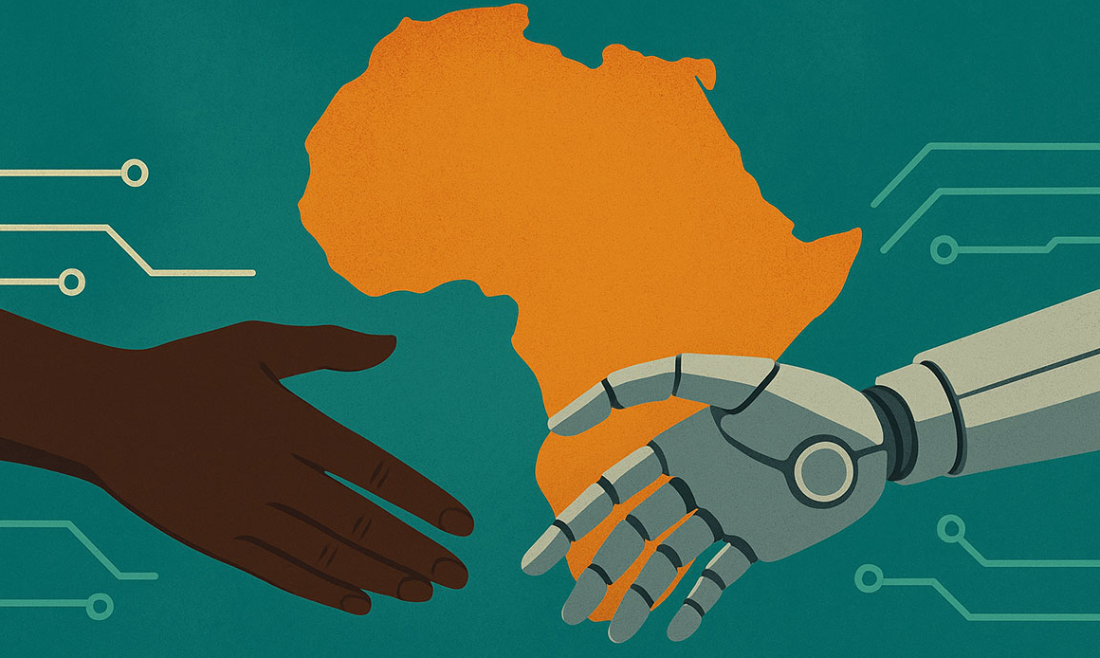
In this context, the World Bank sees significant potential in artificial intelligence to accelerate productivity, stimulate innovation and promote job creation.
However, AI adoption remains limited across the continent. Activity is mainly concentrated in a few economies, notably Kenya, Nigeria and South Africa.
For the World Bank, the challenge is not necessarily to replicate technological models developed in advanced economies, but rather to prioritize solutions adapted to African realities.
Applications capable of operating with limited connectivity could notably provide concrete solutions in essential sectors such as agriculture, healthcare, education, finance, logistics and public services.
Electricity, Internet and Skills
The development of this digital economy nevertheless depends on massive investment in infrastructure and skills.
More reliable electricity supply, affordable connectivity, stronger digital skills and the development of technical capabilities will be essential to enable African economies to fully benefit from AI.
Without these investments, there is a risk of further widening the digital divide between better-equipped economies and countries still facing significant infrastructure deficits.
Inflation and Debt
On the macroeconomic front, the outlook remains mixed. The World Bank forecasts an increase in regional median inflation, from 3.7% in 2025 to 5.5% in 2026, notably driven by rising fuel, fertilizer and food prices.
Public debt, meanwhile, is expected to remain close to 57% of GDP. Above all, the growing burden of debt servicing continues to reduce the fiscal space available to governments to finance essential sectors such as healthcare, education and infrastructure.
Turning Growth into Jobs
The outlook also remains exposed to several risks: worsening geopolitical tensions, new extreme weather events and tighter financing conditions could weigh on economic activity.
Faced with these challenges, the World Bank is calling on African countries to strengthen their institutions, technical skills and regional cooperation.
The challenge now is to transform still-fragile growth into more numerous, better-paid and more productive jobs.
The African Union’s Continental Artificial Intelligence Strategy and the African Continental Free Trade Area (AfCFTA) could play a decisive role in this transformation.
For Sub-Saharan Africa, the challenge is therefore no longer simply to achieve positive growth. It is now about ensuring that this growth benefits populations more widely and supports the continent’s profound demographic and technological transformation.