










In November, Niger granted Starlink a five-year high-speed internet operating license, a strong signal of the country's hopes for Musk's company.
With its thousands of satellites, “Starlink will enable coverage of approximately 80% to 100% of Niger’s territory (1.267 million km²),” said Sidi Ahmed Raliou, Niger’s Minister of Communication.
This represents a significant leap forward for this vast desert country, where internet penetration actually declined between 2022 and 2023, dropping from 37% to 32%. The decline in investments and the widespread destruction of relay antennas by armed groups operating across the country are among the reasons cited by the Electronic Communications and Postal Regulatory Authority (ARCEP) to explain the persistence of the digital divide.
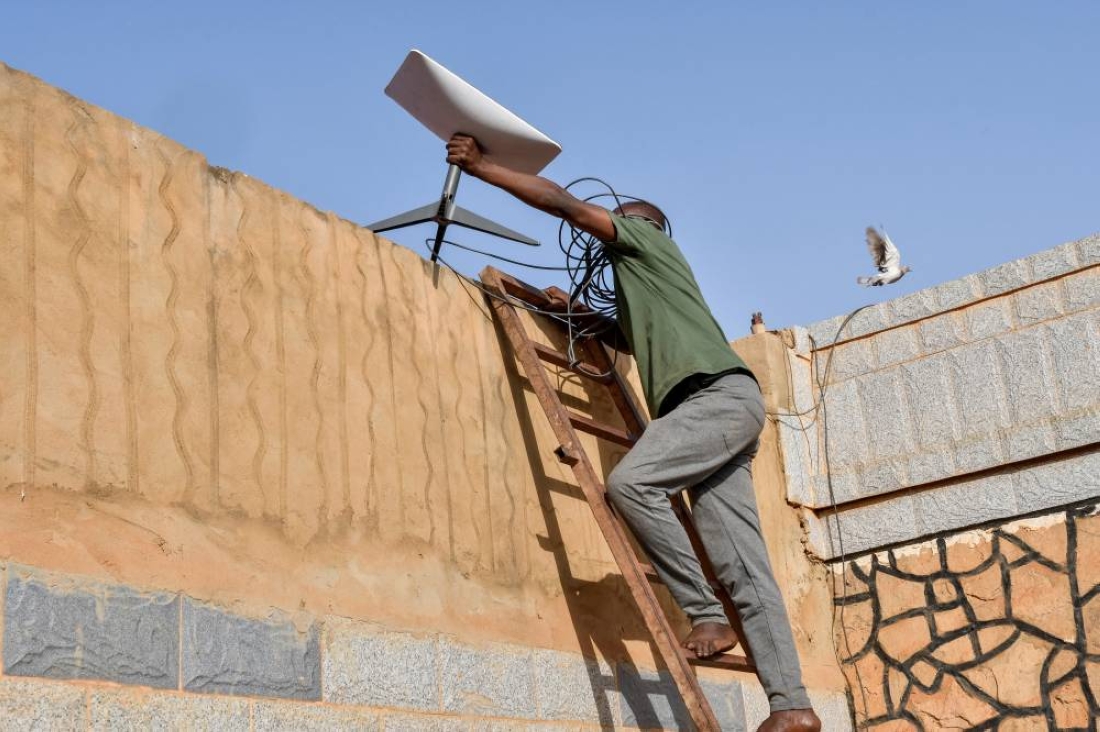
Starlink equipment, sold for between 260,000 FCFA and 400,000 FCFA (€396–€609), is imported from neighboring Nigeria, sometimes entering the country illegally. In the capital, Niamey, however, Starlink kit sales have not yet "exploded," and "only a few households are connected," notes Ali Sat, a merchant, adding that "Starlink is mainly thriving in remote areas of the country."
Starlink, a satellite internet provider owned by Elon Musk’s company SpaceX, relies on a constellation of thousands of telecommunications satellites in low Earth orbit. Unlike traditional satellite internet providers, Starlink chose this orbit over geostationary orbit, as it significantly reduces latency (response time) from 600 ms to approximately 20 ms.
The constellation has been under deployment since 2019 and, as of mid-September 2024, includes about 6,300 operational satellites. By September 2024, Starlink claims to have over 4 million customers.