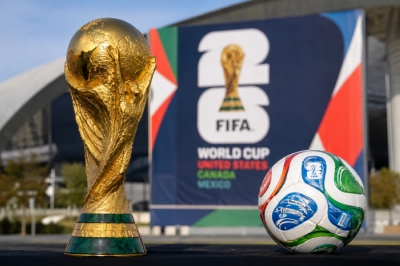









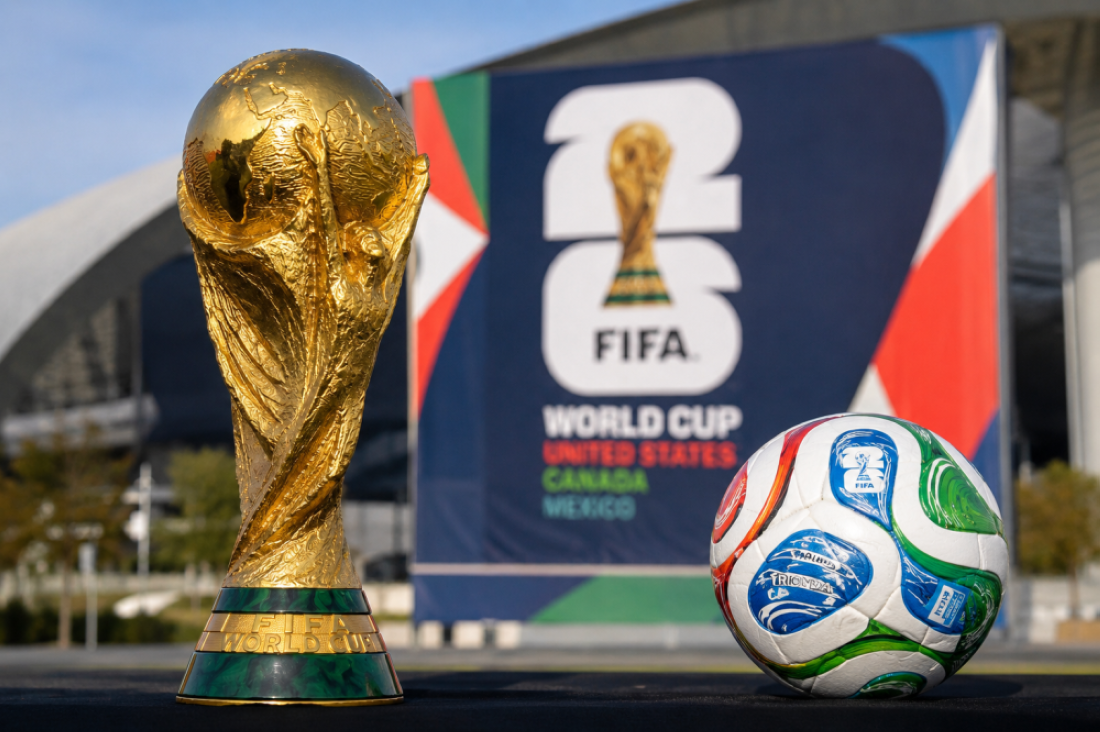


From June 11 to July 19, 2026, the United States, Canada, and Mexico will host the FIFA World Cup 2026, an edition destined to make history in global football.
With an expanded format, new refereeing rules, and major technological innovations, FIFA aims to modernize and speed up the game.
An Unprecedented 48-Team Format
The biggest change in this edition is the expansion of the tournament from 32 to 48 national teams. Under the new official format, teams will be divided into 12 groups of four. Each team will play at least three matches during the group stage. The top two teams from each group, along with the best third-placed teams, will advance to the knockout stage, which will begin with the Round of 32. In total, the tournament will feature 104 matches, a record in World Cup history.
A Technological Revolution in Refereeing
The 2026 World Cup will also mark a significant evolution in the use of technology. The Video Assistant Referee (VAR) system will play an even greater role and will be expanded to cover new situations, including the correction of clear errors such as cards shown to the wrong player or questionable corner-kick decisions.
In addition, the semi-automated offside technology, already tested in previous competitions, will be further enhanced to reduce review times and improve the accuracy of refereeing decisions.
Tackling Time-Wasting
Another FIFA priority is reducing time lost during matches. Several new measures will be implemented:
• A five-second countdown for restarts, including throw-ins, goal kicks, and, in certain cases, corner kicks.
• Penalties for exceeding the time limit, such as loss of possession or a corner awarded to the opposing team.
• A limited time for substitutions, requiring substituted players to leave the field promptly.
• Stricter regulations regarding medical treatment to avoid prolonged interruptions.
These measures are designed to make the game more fluid and increase effective playing time.
A World Cup Across Three Nations
For the first time in history, the FIFA World Cup will be staged simultaneously across three host countries: the United States, Canada, and Mexico. Matches will be played in several iconic cities, with the opening match and the final taking place in major North American venues.
This large-scale organization reflects FIFA’s ambition to make the 2026 World Cup a truly global event, combining sport and entertainment on an unprecedented scale.
A New Era for World Football
With its expanded format, technological innovations, and new disciplinary regulations, the 2026 World Cup promises to be a major turning point in football history. FIFA aims to accelerate the pace of the game, strengthen refereeing fairness, and deliver a more exciting spectacle for fans.
However, this expansion has also sparked debate regarding match intensity, calendar congestion, and the overall competitive balance of the tournament.